
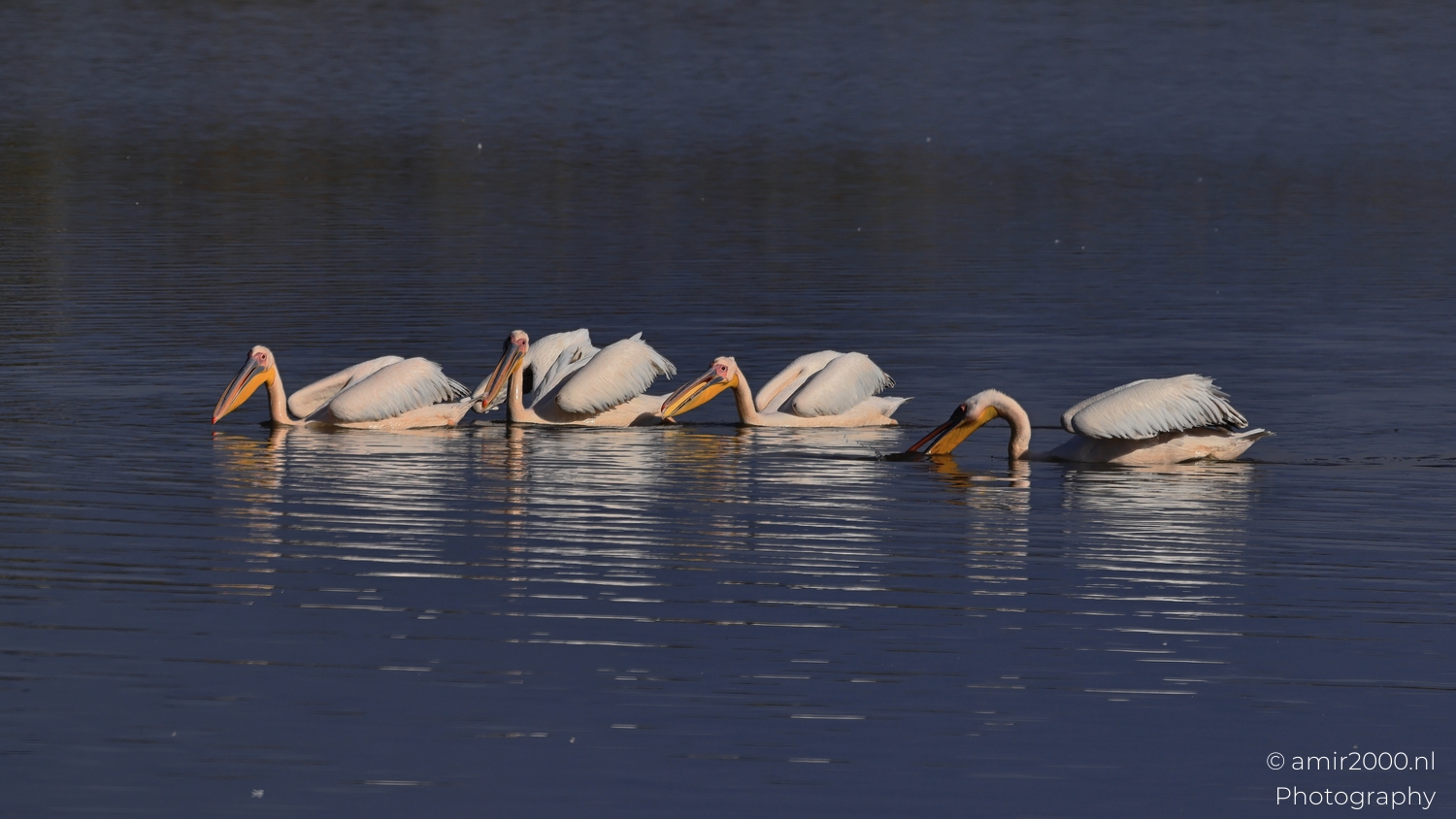
This pelican sequence comes from the same morning in the Nature Landscape Photography series, but it tells a different part of the story. In the earlier great egret post, the pelicans were background and context, drifting and feeding while the surprise landing stole the frame. Here they step forward as the real subject. What held me was not a single dramatic gesture, but the way the flock kept moving in the same direction, holding its spacing with a calm that felt almost deliberate.
That is what stayed with me from this stretch of water in the Hula Valley, Israel. The mood was quiet, the surface was dark and glassy, and the birds seemed to write their own lines across it without forcing anything. Pelicans can look heavy when they are close, but on open water they become surprisingly elegant. Once I started watching their rhythm instead of waiting for a single peak moment, the whole scene opened up.
The line of the flock
Exposure: 1/320 sec | ISO: 160 | Aperture: f/16 | Focal Length: 500 mm | © amir2000.nl
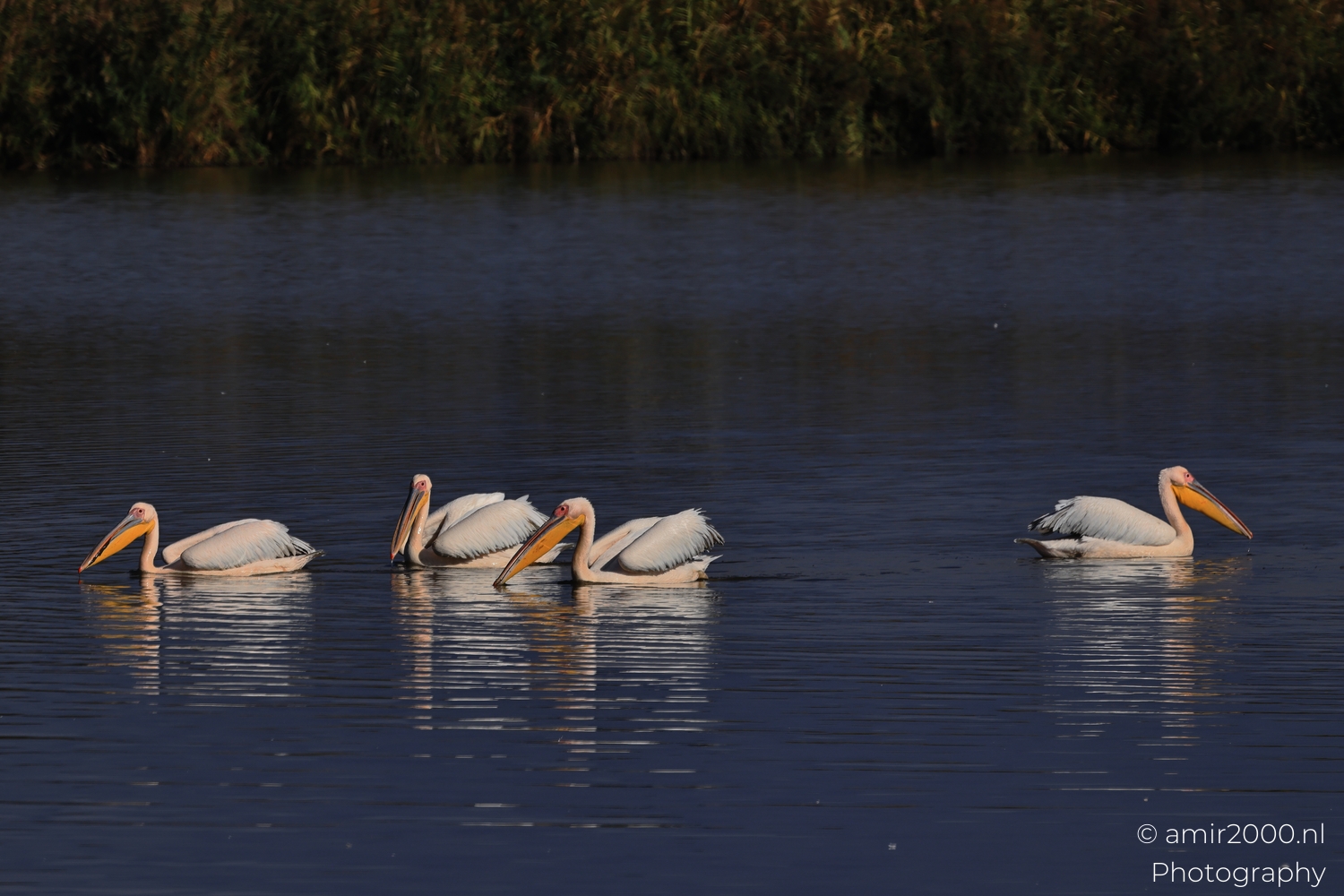
This frame is where the sequence really settles into its own identity. The birds are not colliding, competing, or breaking formation. They are simply moving together, each one holding enough distance to stay readable, while the water binds them into a single visual rhythm. I like how the right side bird gives the frame a quiet destination, as if the others are following a path that only they understand. On a morning like this, even a gentle change in spacing becomes photographic structure.
Exposure: 1/320 sec | ISO: 160 | Aperture: f/16 | Focal Length: 500 mm | © amir2000.nl
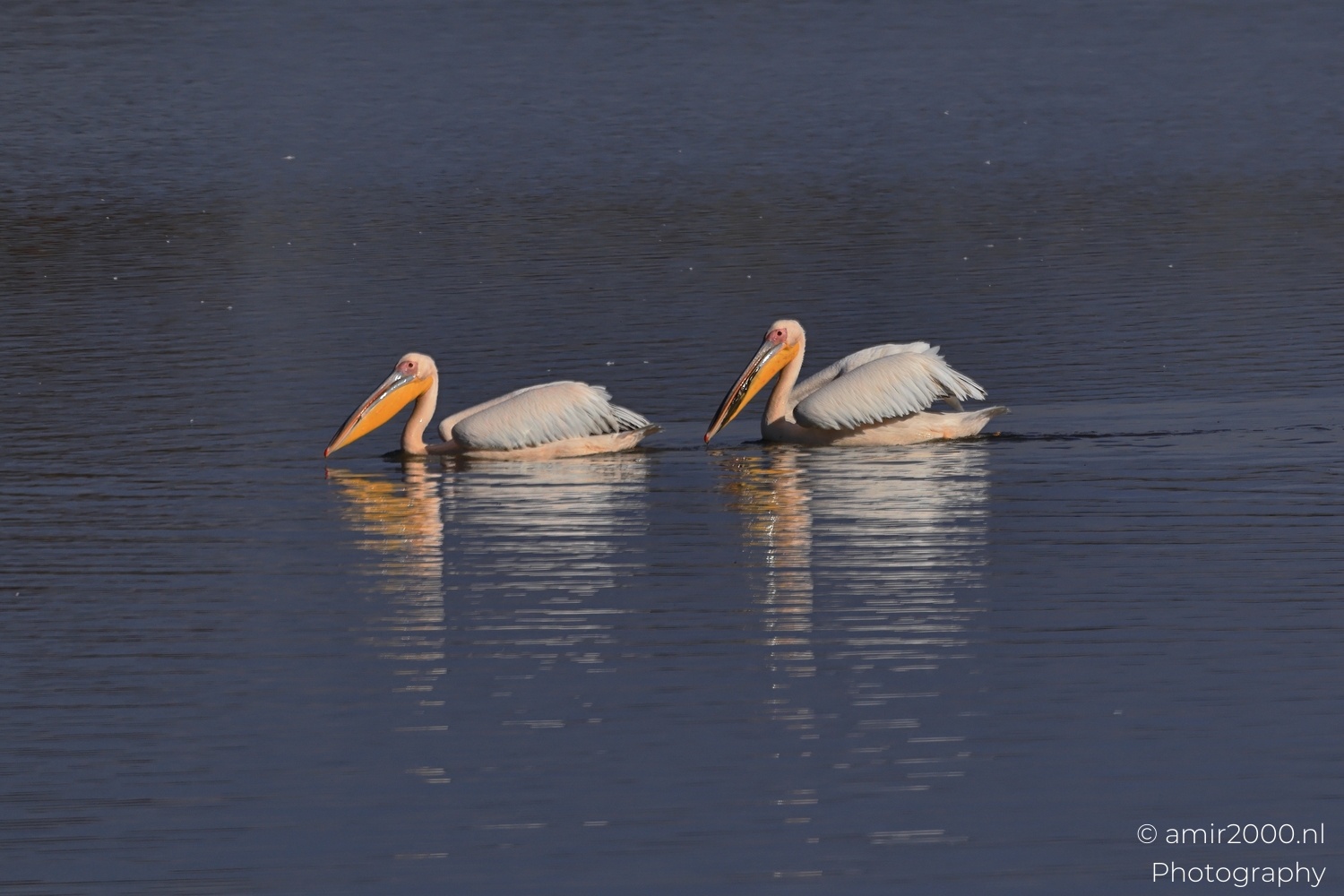
With fewer birds in the frame, the scene becomes more about shape and pace. The long bills, rounded bodies, and low reflections do the work without needing any obvious action. I am drawn to images like this because they prove that wildlife photography does not always need impact in the loud sense. Sometimes the reward is restraint: two birds, one direction, enough space around them, and a background simple enough to let the eye stay where it should.
Exposure: 1/320 sec | ISO: 160 | Aperture: f/16 | Focal Length: 500 mm | © amir2000.nl
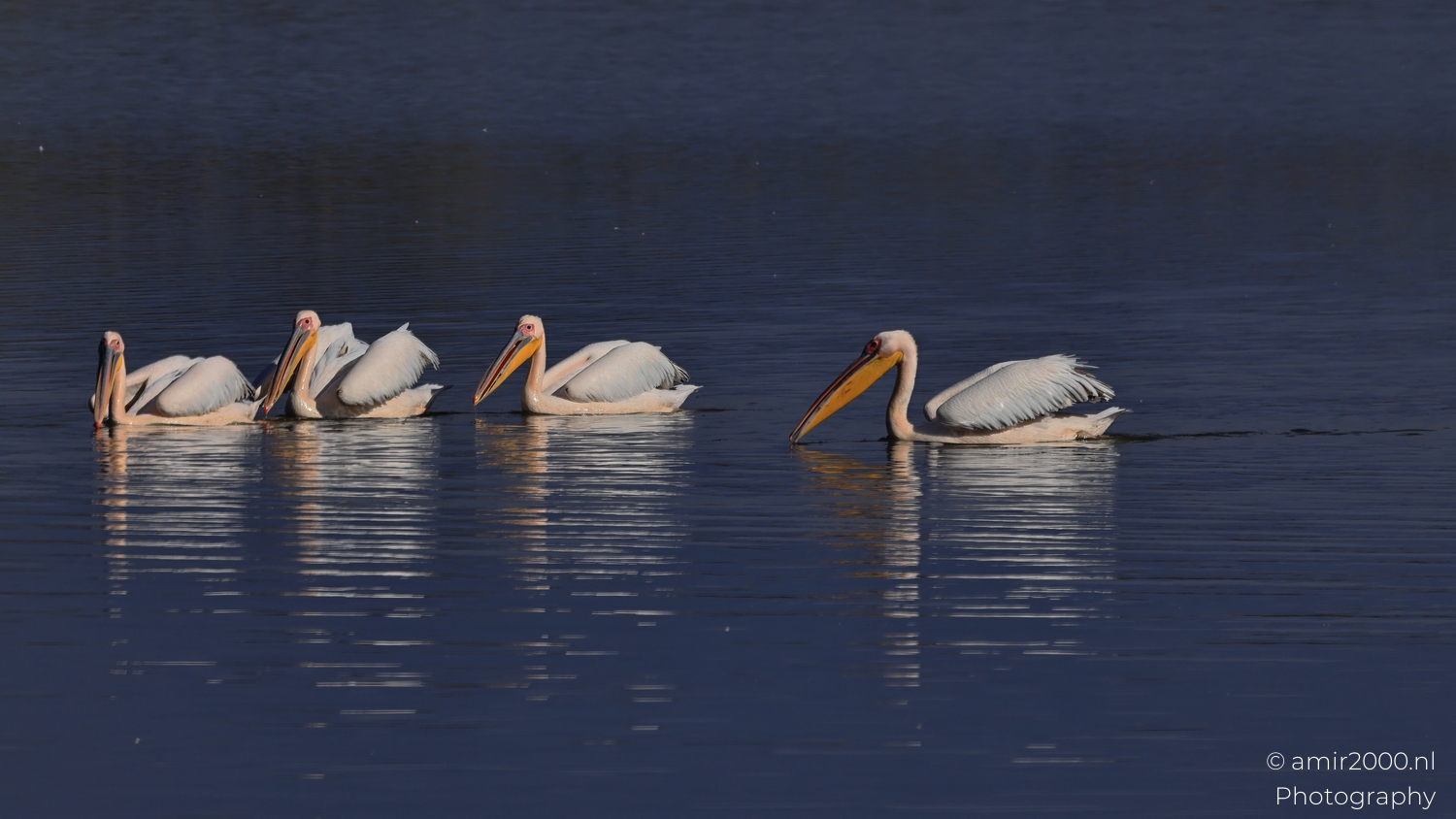
This image sits somewhere between the first two. It has the repetition of the group frame and the openness of the quieter pair, which makes it useful in the middle of the story. What I enjoy most is the consistency of movement. Nobody is breaking away, nobody is pulling attention in the wrong direction, and that shared travel line turns the water into a stage for coordination rather than spectacle. It is a simple scene, but simplicity is exactly why it works.
Rest, distance, and the shape of the lake
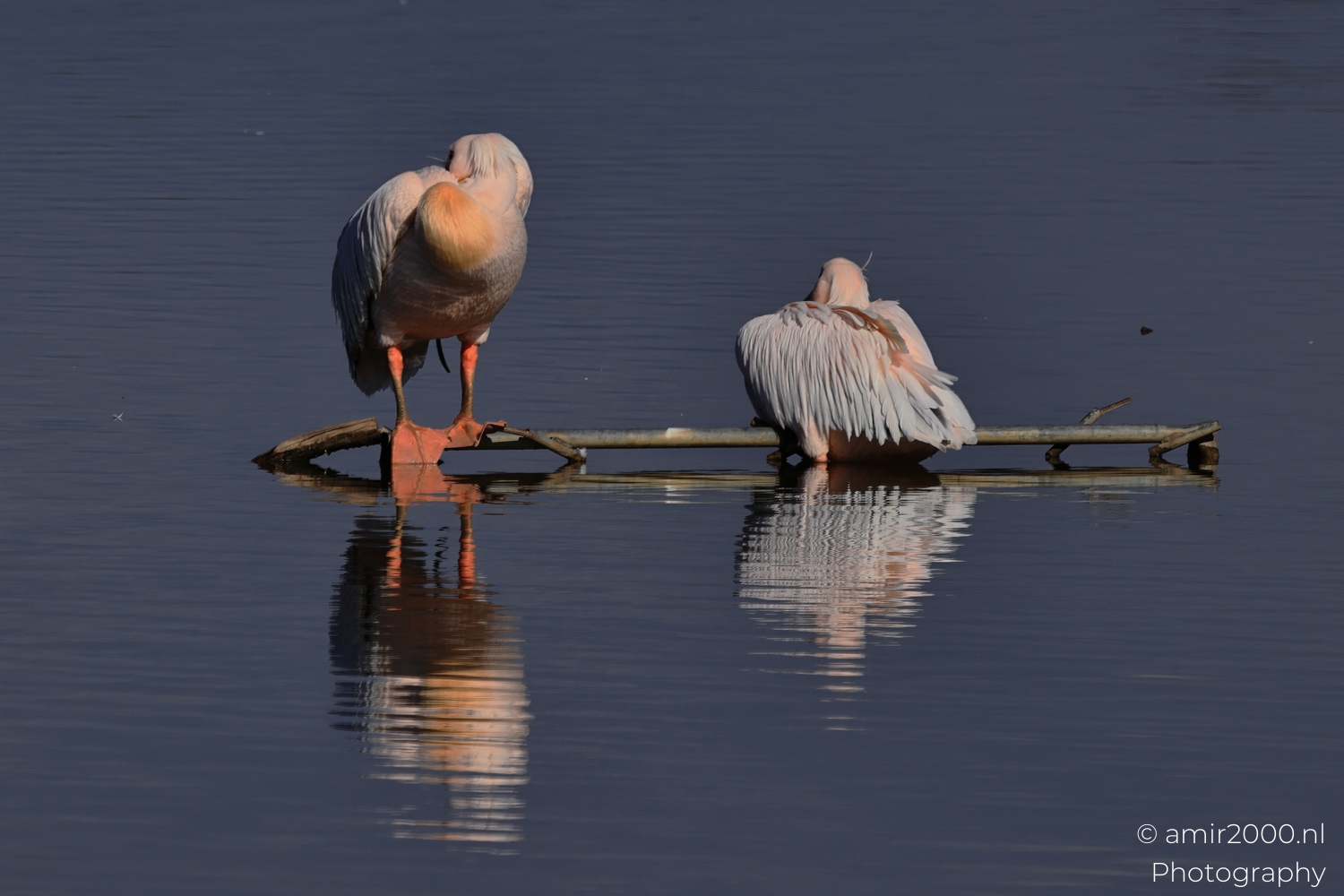
Exposure: 1/320 sec | ISO: 160 | Aperture: f/16 | Focal Length: 500 mm | © amir2000.nl
The driftwood frame changes the tempo. After watching the birds slide across the lake, seeing them perched and settled adds a second layer to the morning. They still belong to the same atmosphere, but now the emphasis shifts from motion to posture. I like the way the wood cuts a horizontal line through the scene while the reflections below keep everything connected. It feels observational rather than performative, which is exactly the tone I want from this set.
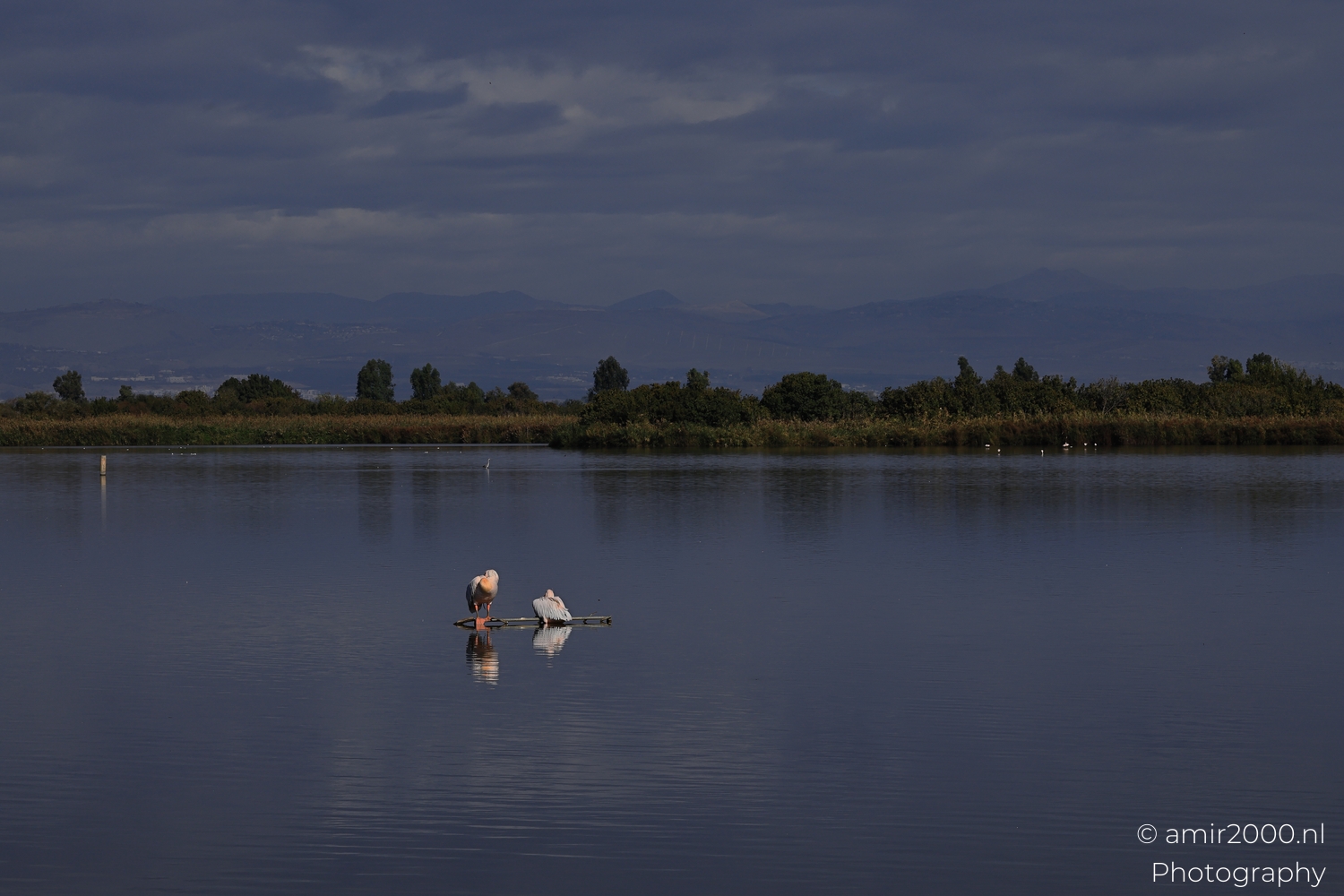
Exposure: 1/320 sec | ISO: 160 | Aperture: f/16 | Focal Length: 106 mm | © amir2000.nl
This wider view matters because it gives the birds room to belong to the landscape. Up close, pelicans can dominate a frame with their size and bill shape. From farther back, they become part of the geometry of the lake, small figures resting inside a much larger quiet surface. I would not use this as the leading image, but deeper in the post it adds scale and breathing room. It reminds me that the Hula experience is not only about the bird itself, but about how water, distance, and patience shape the seeing.
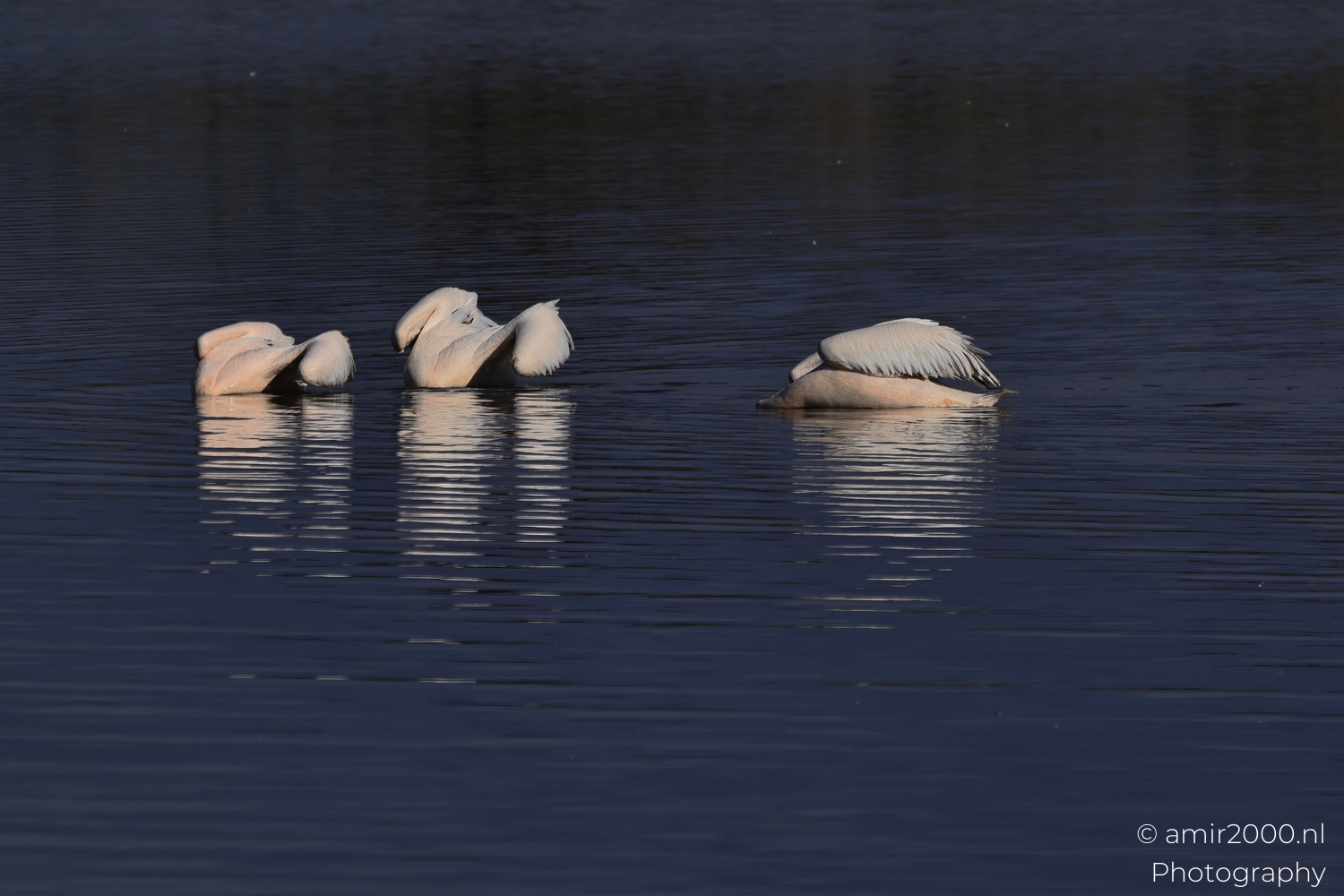
Exposure: 1/320 sec | ISO: 160 | Aperture: f/16 | Focal Length: 500 mm | © amir2000.nl
I wanted to end on a darker, softer note. This frame keeps the same directional movement, but the lower light and heavier tone make it feel more inward. Not every photograph in a sequence has to shout. Some are there to close the door gently, to leave the mood hanging a little longer after the details fade. That is what this one does for me, and it is also why this pelican post needed to exist separately from the egret moment.
If you want more from this area, browse the Nature gallery for related wetlands, birds, and quiet landscape work from the field. This sequence belongs to that slower side of nature photography, where atmosphere and spacing matter as much as the subject itself.
Amir
Photographer, Builder, Dreamer
amir2000.nl
Comments
No comments yet. Be the first to comment!