
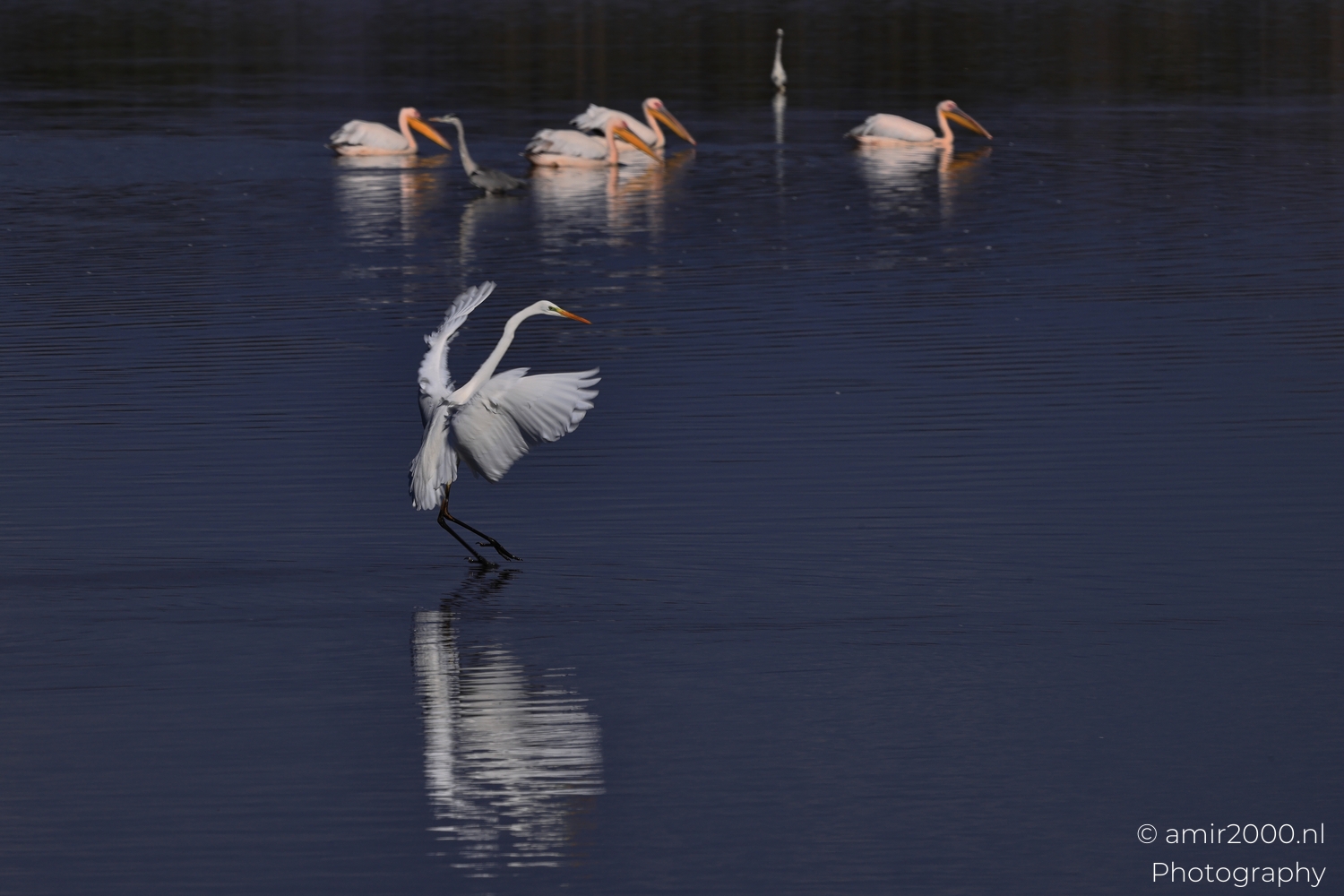
Morning light in the Hula Nature Reserve has a specific kind of calm. The water goes dark and glassy, the ripples soften, and the whole scene feels like it is holding its breath. I was watching the pelicans drift and feed in the distance when a great egret suddenly came in low and clean, giving me a short window to catch the landing and its reflection. This post sits in my Nature Landscape Photography series.
It was not a planned shot. It was one of those small gifts you only get when you stay long enough for the scene to change on its own. The pelicans were the main show, then the egret arrived like a white punctuation mark, cutting across the frame and turning the water into a stage. I keep returning to Hula, especially during migration season, because the mix of stillness and sudden motion is constant.
Landing on dark water
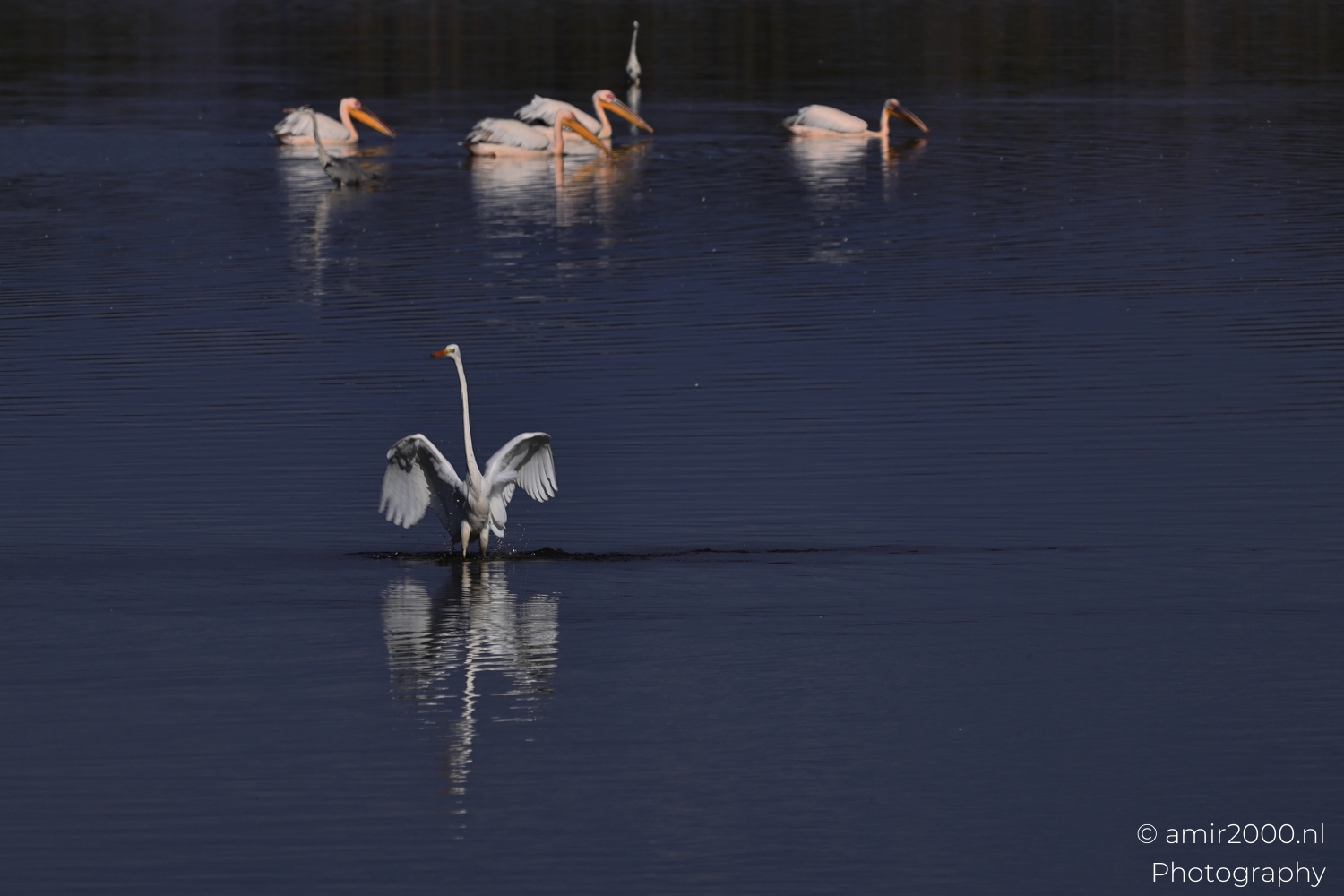
Exposure: 1/200 sec | ISO: 160 | Aperture: f/20 | Focal Length: 472 mm | © amir2000.nl
This is the moment right as everything changes. The egret comes in with the legs extended, wings working like brakes, and the reflection already stretching below it. I like the distance here: the pelicans stay present as context, but they do not steal focus. A darker wader crosses the frame behind them, adding a second layer of movement without turning the scene into noise.
Composition wise, the empty water is not empty at all. It carries the ripples, the color gradient, and the mirrored shape, and it gives the bird room to breathe. The dark surface also makes the whites feel sculpted, but it is unforgiving if you push contrast too hard. The goal is clean feather detail with no crunchy edges and no blown highlights.
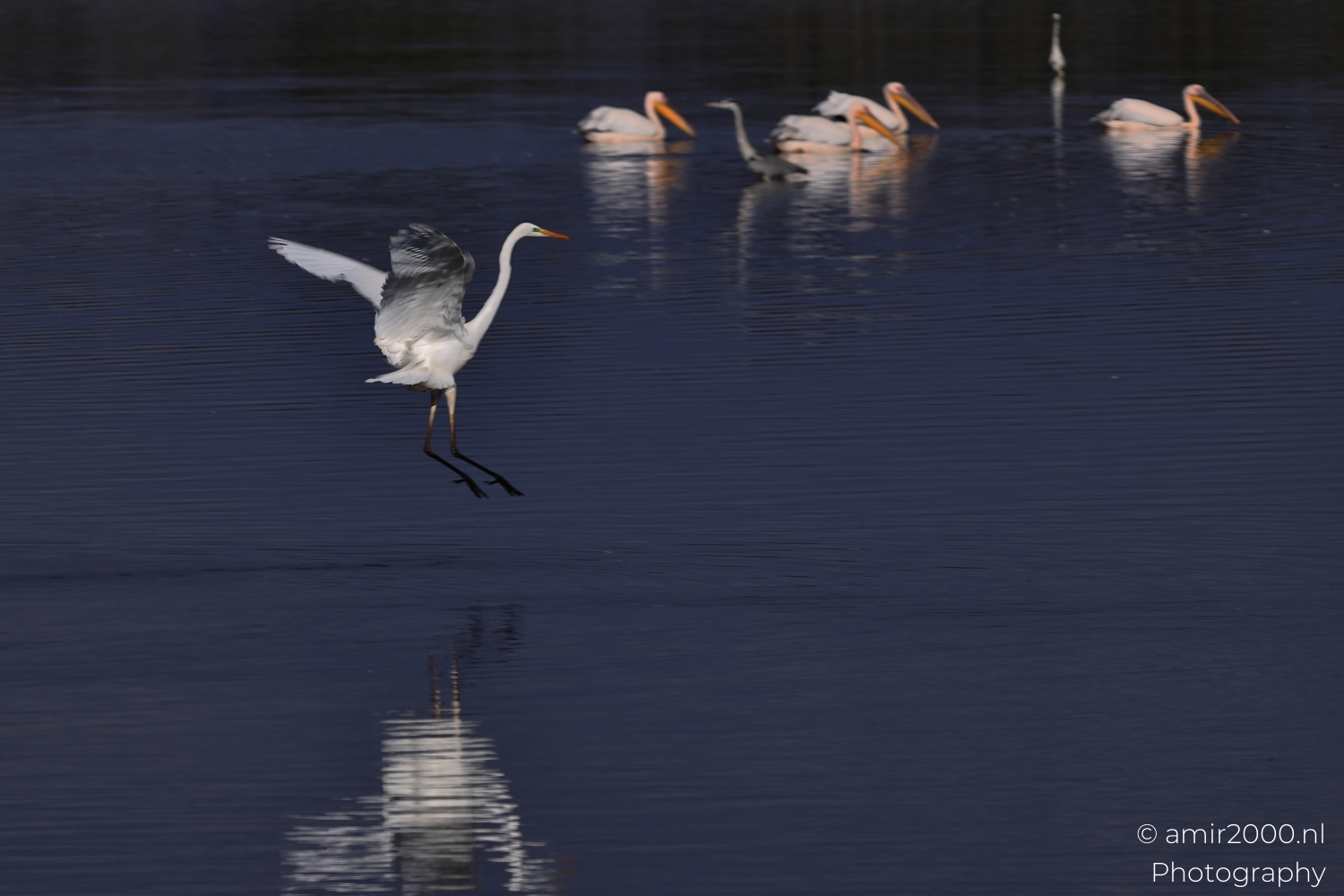
Exposure: 1/200 sec | ISO: 160 | Aperture: f/20 | Focal Length: 472 mm | © amir2000.nl
The approach frame is all about line and control. The long neck and the orange bill cut through the blue dark water, and the legs hang like a ruler measuring the last few centimeters. Great egrets are large white wading birds with black legs and a yellow to orange bill, and that clean contrast is exactly why they read so strongly against a moody background. In soft morning sun, the whites stay gentle if you keep exposure disciplined.
This is also where timing becomes simple: watch the legs, not the wings. The wings will blur a little no matter what, but the legs tell you when the bird commits to the surface. The reflection is the bonus layer. If it lines up, the frame feels complete, almost like the bird is landing into its own shadow.
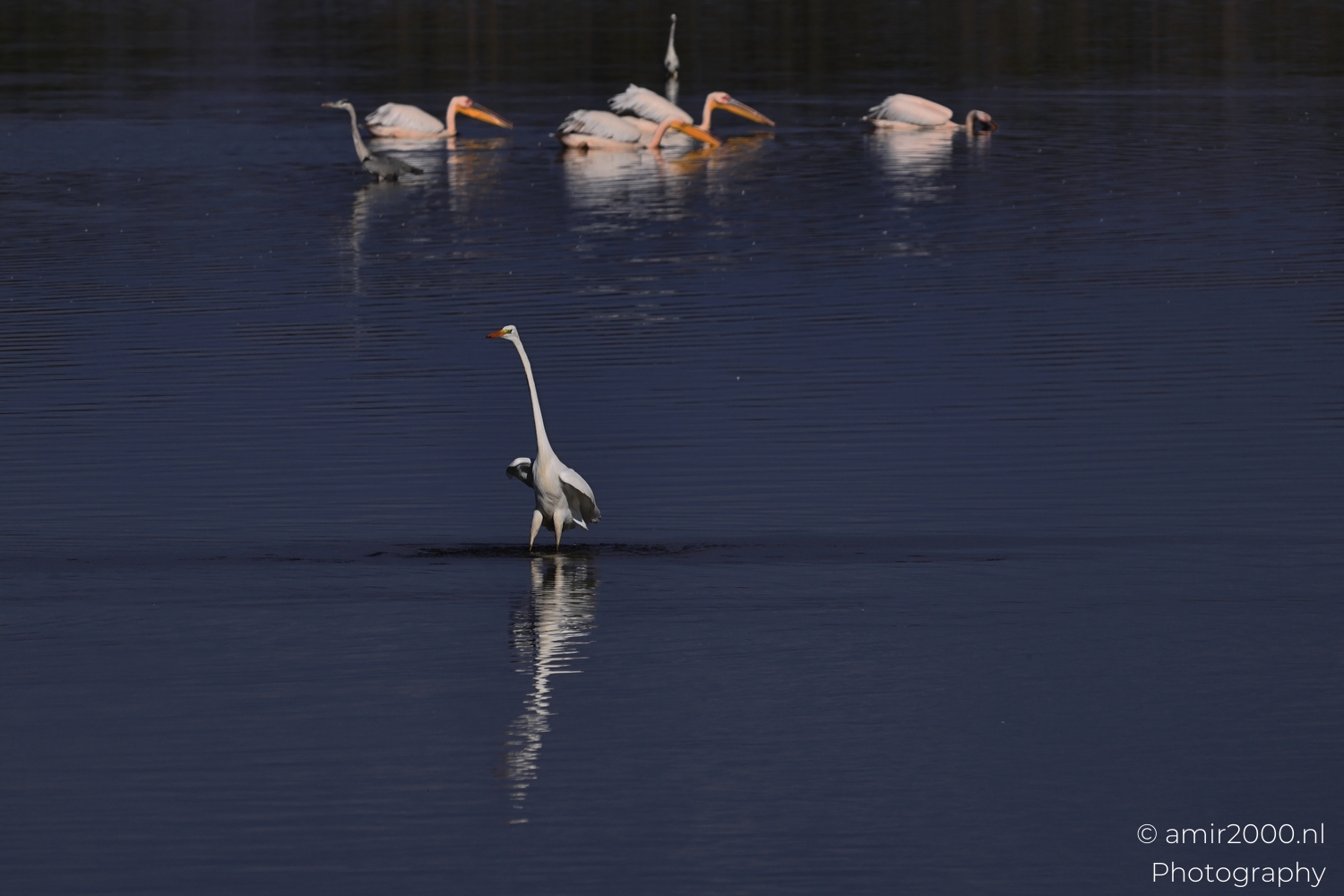
Exposure: 1/200 sec | ISO: 160 | Aperture: f/20 | Focal Length: 472 mm | © amir2000.nl
Then the water answers back. You can see the thin disturbance line where the feet touched and the surface started to break. This is where the story becomes physical: the landing is not just a pose, it is weight meeting water. The pelicans behind feel almost indifferent, which is perfect, because it keeps the scene honest and observational.
I love that the background stays soft and calm. The egret is the headline, but the pelicans explain the place: open water, birds at rest, and that slow rhythm that makes you wait for the next surprise. When the light is right, the whole frame becomes about quiet tones, not drama.
After the splash, the stillness
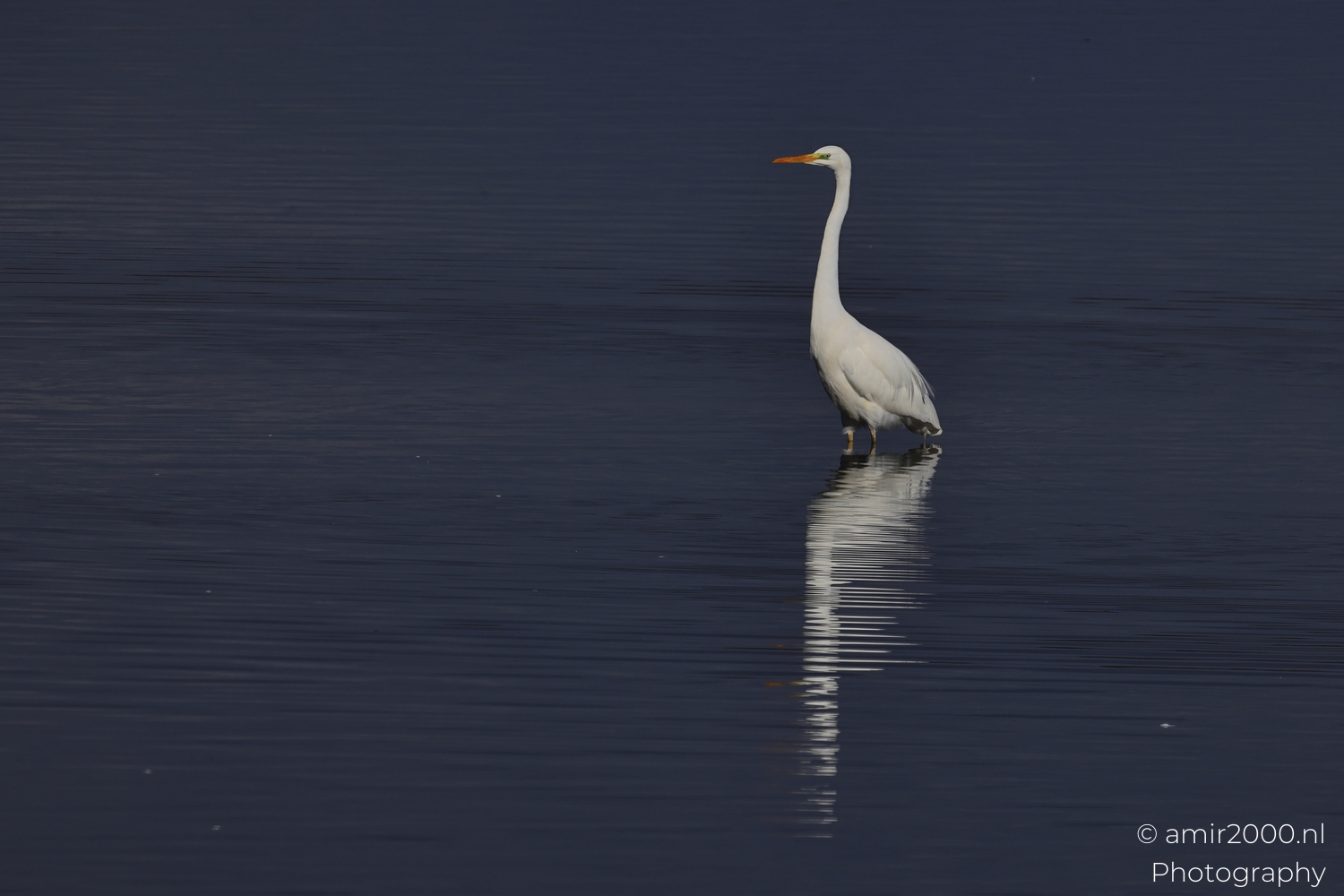
Exposure: 1/250 sec | ISO: 160 | Aperture: f/18 | Focal Length: 500 mm | © amir2000.nl
Once the wings fold, the egret turns into a quiet sculpture. This is the part I come back for on repeat visits: the pause after action, when the subject holds still and the water becomes a canvas again. Great egrets often hunt by wading slowly in shallow water, sometimes standing still while watching for fish. Even when they are not hunting in a frame, that patient posture is always there.
The reflection here is not perfectly smooth, and that is exactly why it works. The small ripples turn the mirror into a brush stroke, and the white body stays readable without looking pasted on top of the scene. It is the kind of frame that rewards a slower edit: keep the blacks deep, protect the feather detail, and let the water stay moody.
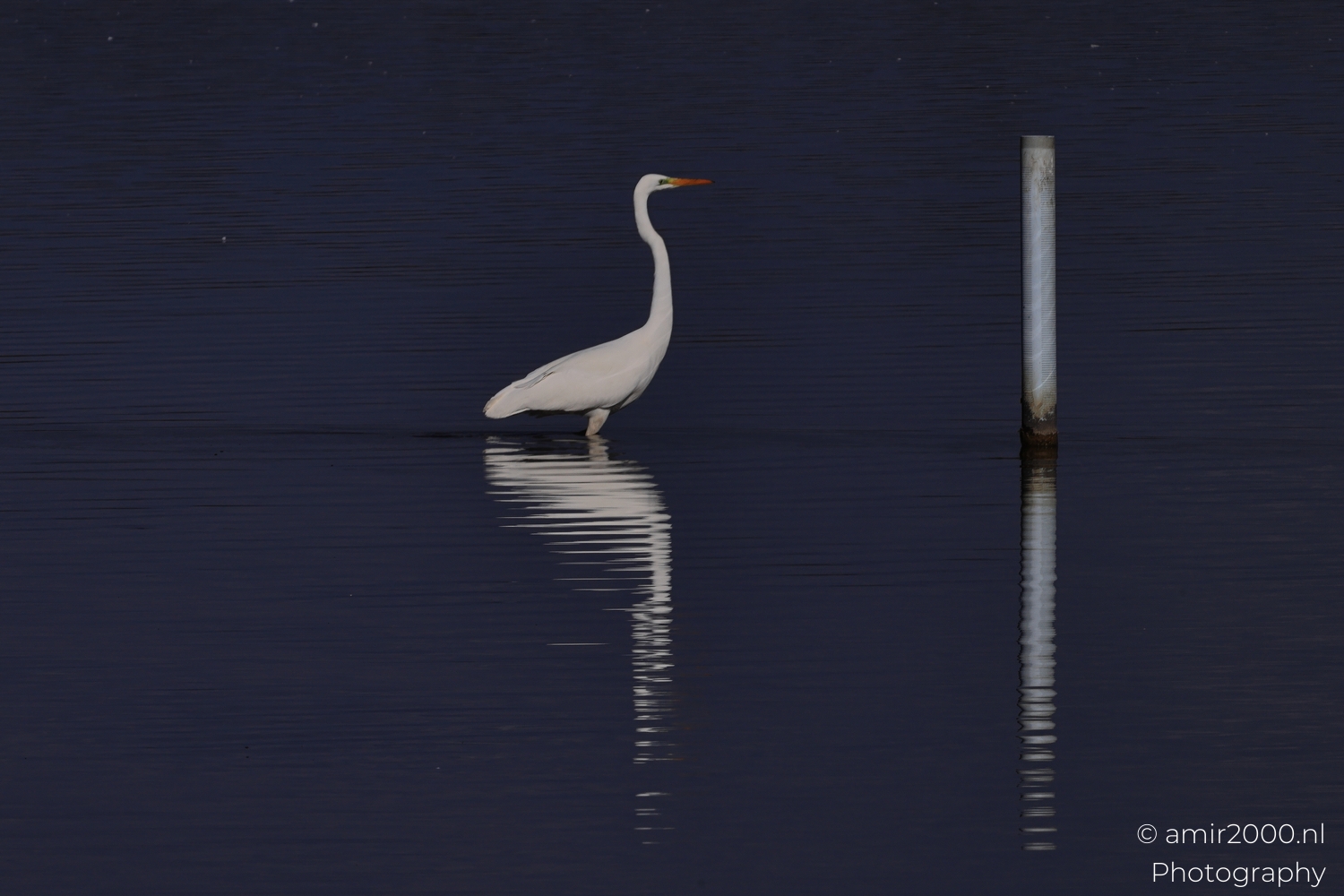
Exposure: 1/200 sec | ISO: 160 | Aperture: f/22 | Focal Length: 500 mm | © amir2000.nl
The pole frame is the graphic finish. It adds a straight, human made element against all that natural texture, and it breaks the reflection into small bright steps. The bird becomes a clean curve next to a strict vertical line, and the water ties both together with repeating ripples.
I have visited Hula many times, but I keep aiming for the migration period because the reserve becomes a living stage then, full of arrivals, departures, and sudden surprises like this one. Hula Nature Reserve is a major wet habitat for water birds and a well known place to observe bird migration in Israel. Some days you photograph the obvious subject; other days the obvious subject is just the warm up.
If you want more from this area, browse the Nature gallery for related work from wetlands, landscapes, and wildlife.
Amir
Photographer, Builder, Dreamer
amir2000.nl
Comments
No comments yet. Be the first to comment!