
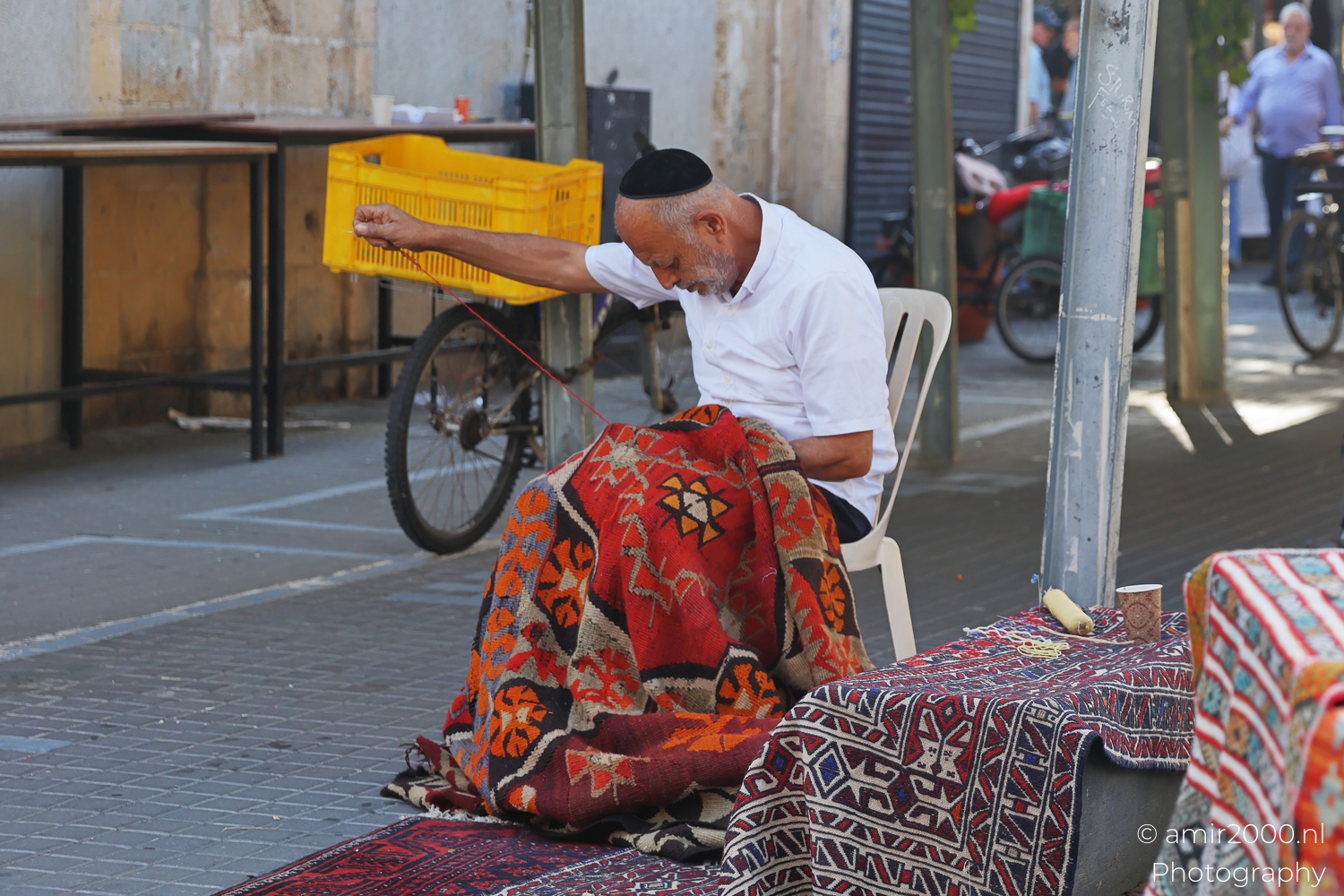
Rug repair begins with the craftsman holding a red thread tight above the carpet before the next stitch. He bends over the heavy rug with one arm extended and the other hand close to the fabric, turning a market stall edge into a working place for patient, exact repair.
He does not look up for the passing street. His head stays low, his shoulders lean into the job, and the rug covers most of his lap while the thread draws a thin red line from his hand to the torn area. The action is small, but it changes how the people around him have to read the space. He is not waiting, selling, or resting. He is working in full view, and the street has to make room for that.
Exposure: 1/500 sec | ISO: 160 | Aperture: f/3.2 | Focal Length: 70 mm | © amir2000.nl
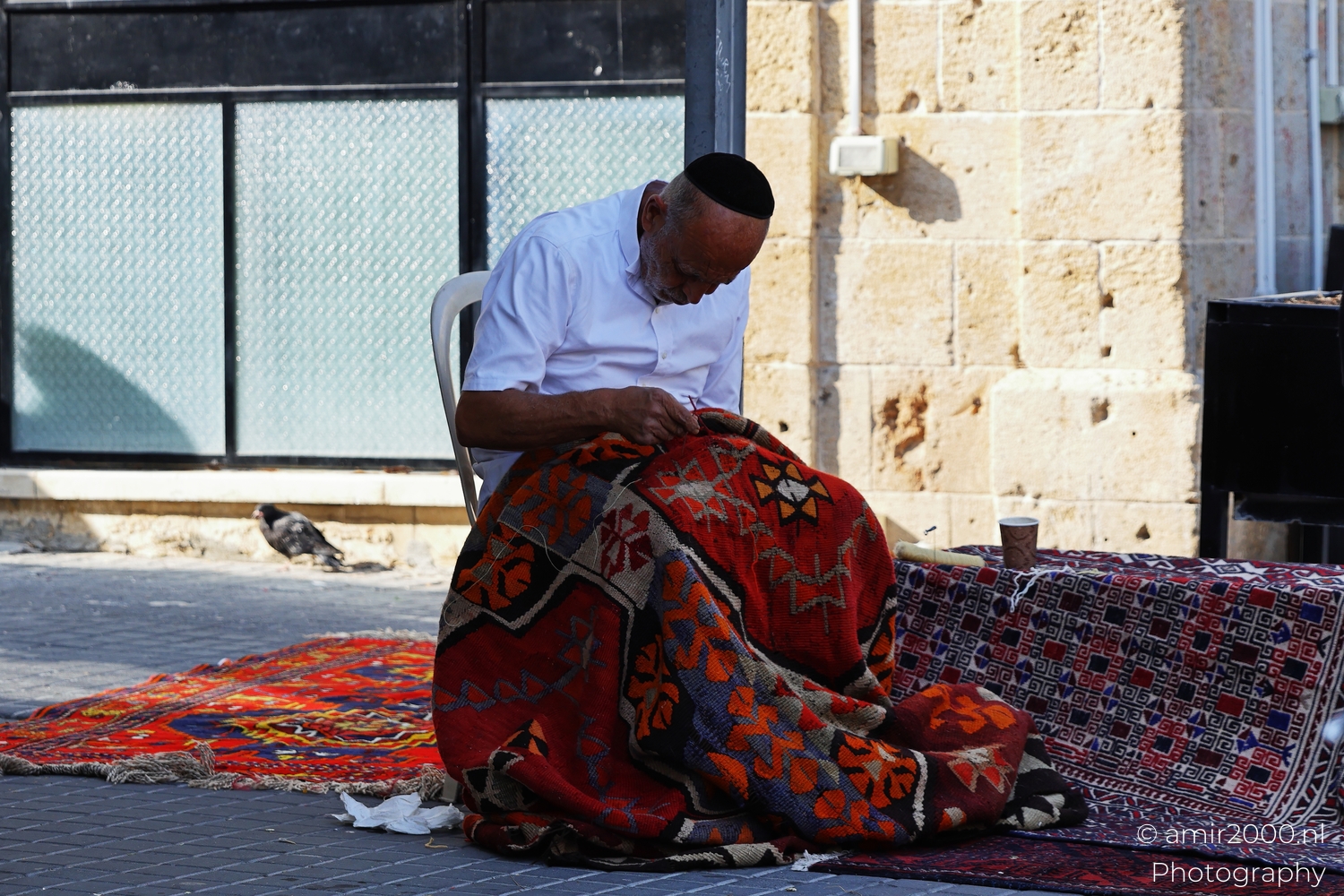
He pulls the thread back toward the fabric, and the repair becomes tighter, quieter, closer to his body. When the stitch is near his fingers, his posture changes from a wide reach to a hunched, careful position over the rug. The patterned carpet is large enough to dominate the area around him, but his attention stays on the place where needle, thread, and damaged weave meet.
He keeps working while the market continues around him. Rugs lie near his feet, people pass beyond the working area, and the chair under him matters only because it lets him stay low enough to handle the fabric properly. His body makes a boundary without a sign or a barrier. The outstretched arm asks for space, the lowered head refuses interruption, and the repair holds its own pace against the movement nearby.
Exposure: 1/500 sec | ISO: 160 | Aperture: f/3.2 | Focal Length: 70 mm | © amir2000.nl
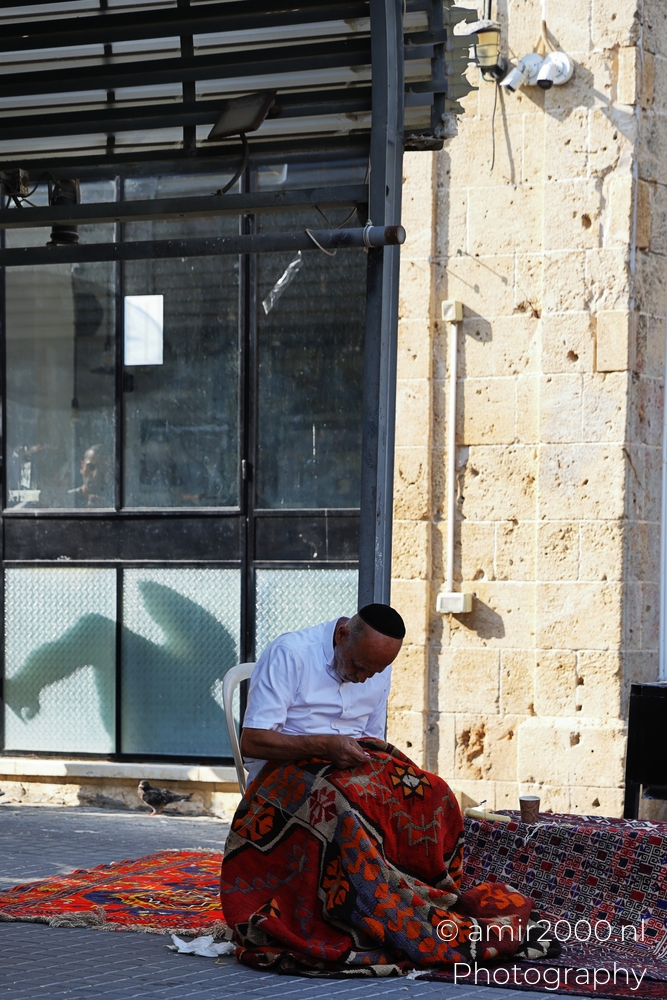
The craftsman folds farther forward when the thread work comes down to the surface of the rug. His hands are close together now, and the repair looks less like strength than control. A passerby would have to look twice to notice the exact point of work, but the posture gives it away. The shoulders are rounded, the face is angled down, and the rug becomes both object and occupation.
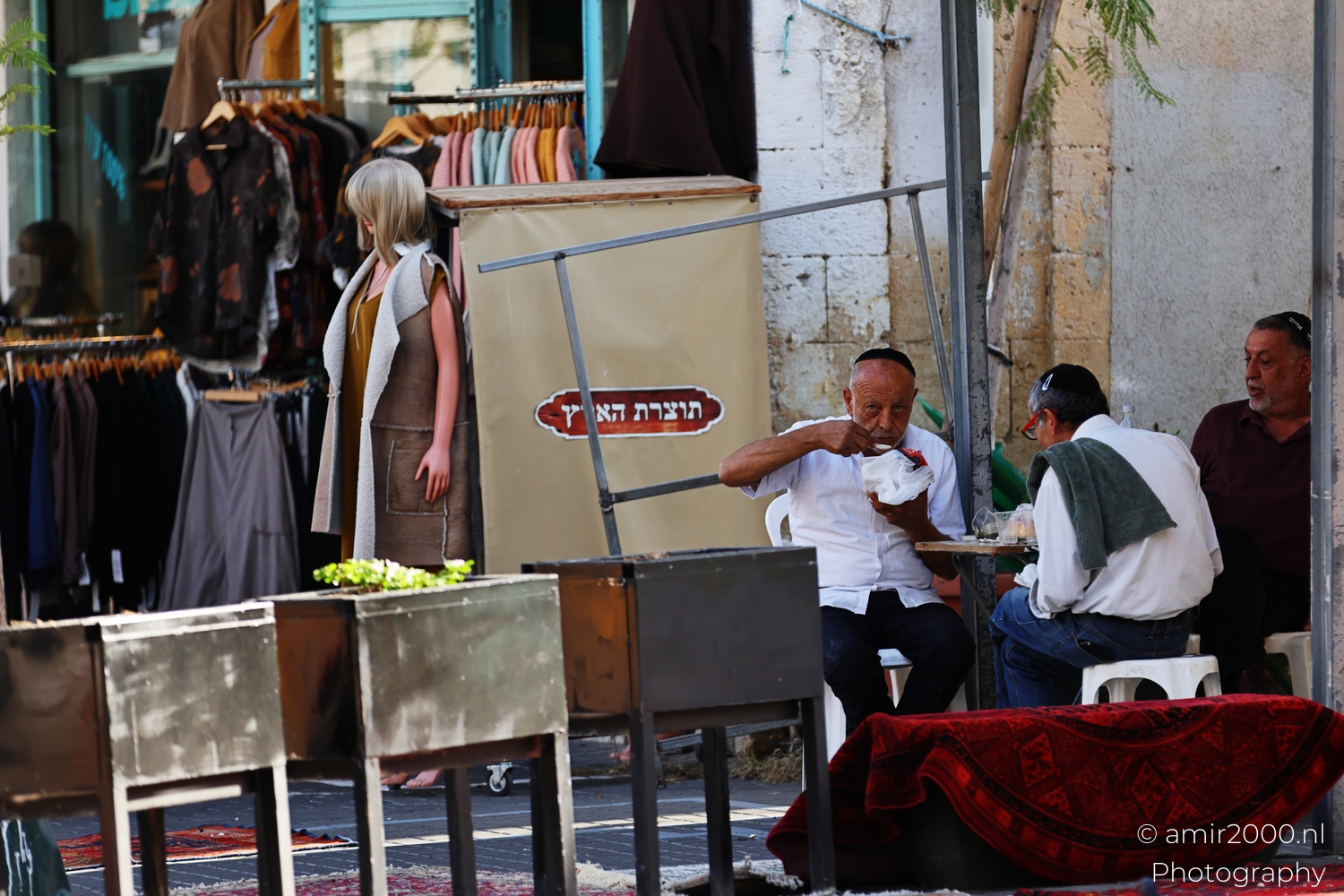
A few steps away, men gather at a small table and make their own temporary claim on the market. One man raises food to his mouth while another leans in with his back turned, and a third sits angled toward the conversation. Their bodies close the distance between them. The meal takes place in the same narrow working street as the rugs, but the pressure is different: less handwork, more exchange, with each man adjusting his place around the others.
Exposure: 1/500 sec | ISO: 160 | Aperture: F2.8 | Focal Length: 200 mm | © amir2000.nl
The seated men keep the table active through small movements. A hand comes up with food, a head turns toward the talk, a shoulder leans forward, and the group stays packed into the available shade. Behind them, a clothing stall and hanging garments press close, but the human arrangement is sharper than the stall itself. The men are not arranged for display. They are arranged by appetite, habit, and the need to hear one another.
The craftsman and the men at the table use the same Tel Aviv Jaffa market street without turning it into a stage. One scene is built from thread, pressure, and repair. The other is built from food, conversation, and the small adjustments people make when space is limited. Together, they show the market as a place where work and daily life happen side by side, without announcement.
More work from this collection is in the People Creative Collection gallery and the People Street Photography category.
Amir
Photographer, Builder, Dreamer
amir2000.nl
Comments
No comments yet. Be the first to comment!