
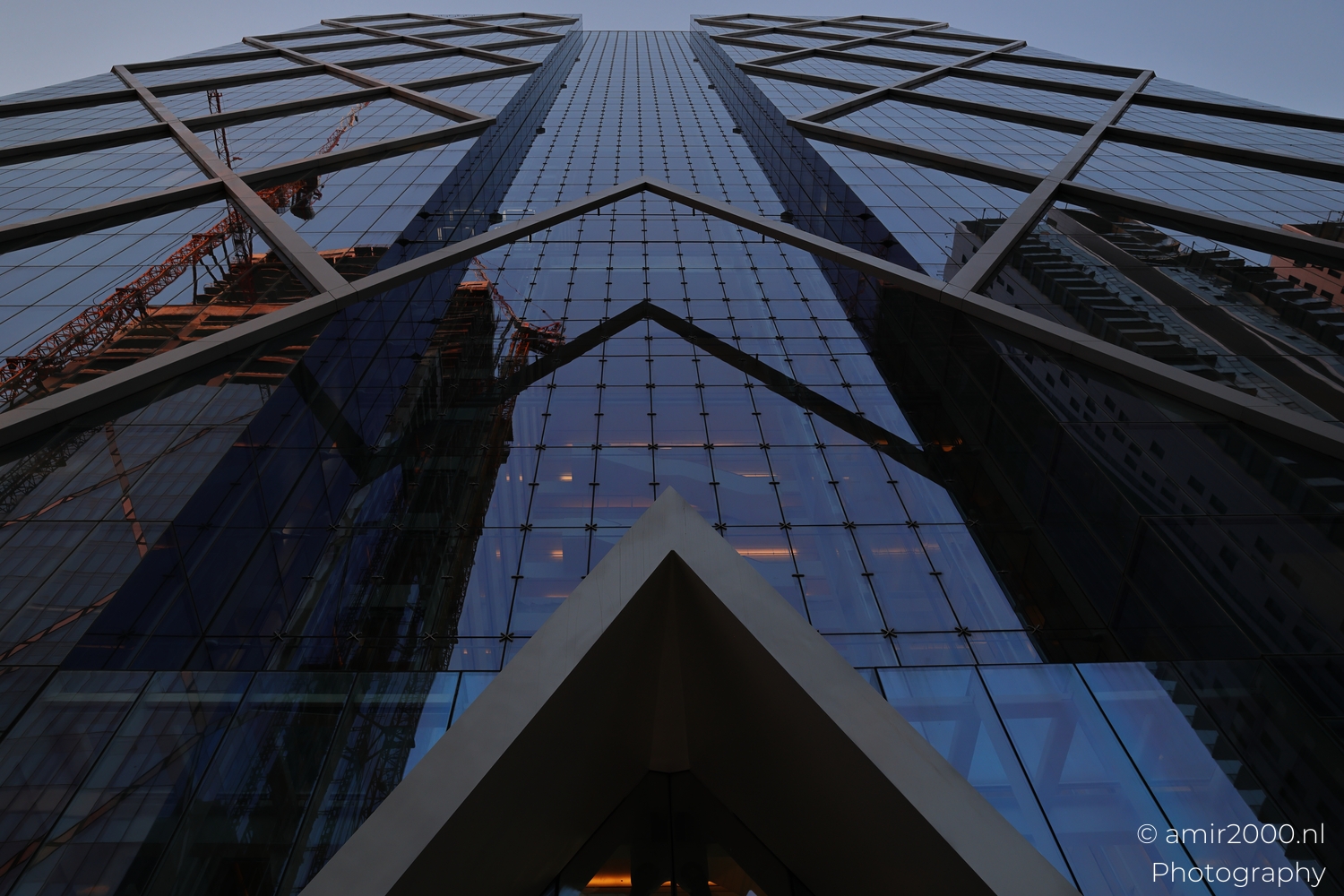
I stopped under Landmark TLV Tower B at dusk and sat on a bench, trying to rest for a minute. It did not work. The diagonal pattern on the glass kept pulling my eyes upward, and every time I looked up I found a new intersection or repetition worth framing. From that position the facade fills your peripheral vision, so even a small shift of your shoulders changes the whole drawing above you. I could not resist, so I pulled out the camera and started shooting from right underneath the building.
What caught me first was the uniqueness of the design and how the pattern shifts as you move your body a few steps. The diagonal skin turns the tower into a mix of diamonds and triangles, and the grid never feels flat because it keeps re-aligning with your viewpoint. This post sits inside my Architecture Photography series, where I treat buildings as visual systems: lines, rhythm, reflection, and the small disruptions that change how the structure reads. The cranes and the unfinished neighbor are part of the scene, but the geometry is the hook.
Dusk helps everything stay clean and readable. The sky turns into a smooth background, glare drops, and the glass holds detail without fighting you. Beside the finished pattern, the open floors and scaffolding introduce a rough counterpoint, and the cranes add temporary lines that will not be there forever. I like this hour because you can still see structure clearly, while hints of interior warmth begin to show behind the glass. That contrast between precision and process is the quiet story running through this set.
Patterns that refuse to stay still
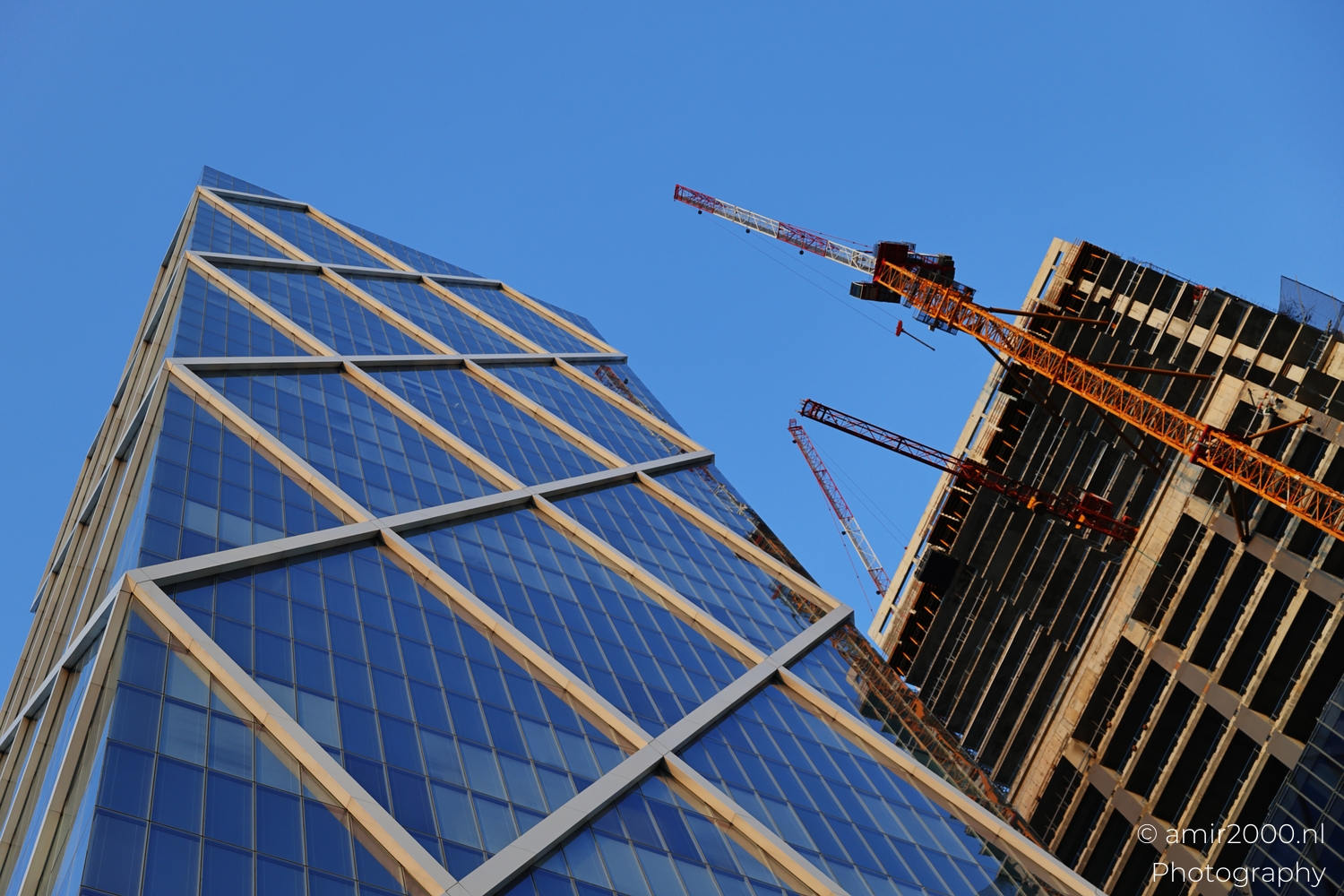
Exposure: 1/640 sec | ISO: 160 | Aperture: F2.8 | Focal Length: 50 mm | © amir2000.nl
I leaned into the tilt here on purpose. The facade becomes a wedge of repeating glass squares, while the diagonal bracing breaks the grid into triangles and pushes your eye upward. The crane arm crosses the negative space like a drawn stroke, adding tension and direction without clutter, and the warm orange tone gives the composition a single strong accent. With the sky so even at this hour, the structure can carry the whole frame, and the smallest lines get to matter.
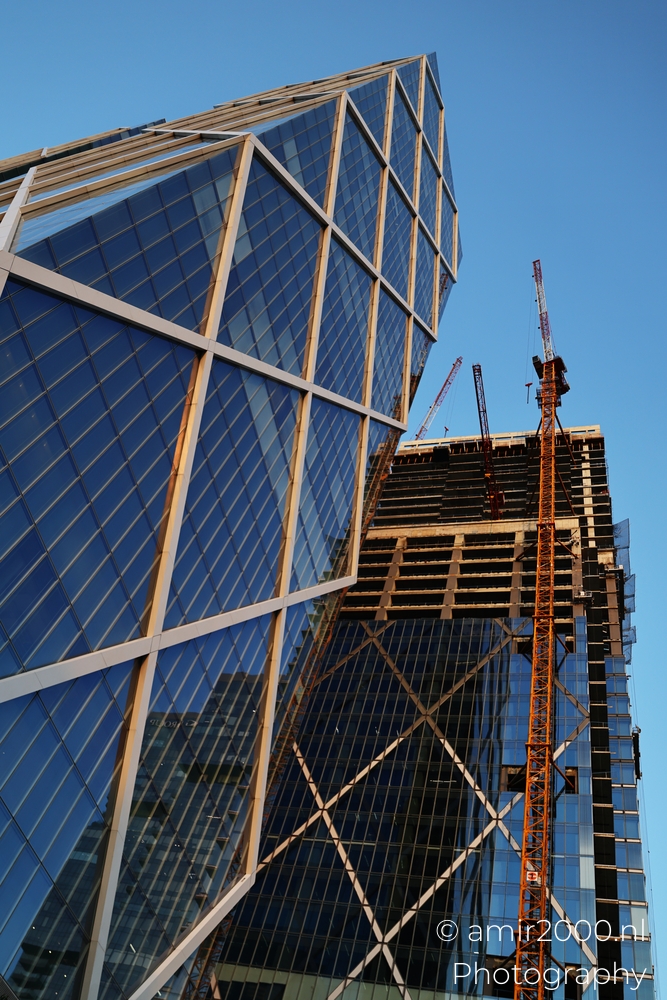
Exposure: 1/640 sec | ISO: 160 | Aperture: F2.8 | Focal Length: 24 mm | © amir2000.nl
This angle compresses the story into two layers. On the left, the finished surface reads like a precise shell, and the diagonal pattern feels almost armored; on the right, the unfinished tower shows open floors and raw structure with no hiding. The orange crane works like a vertical ruler, separating polished geometry from the construction stack and hinting at scale, and it also anchors the frame so your eye does not drift off into the sky. From this close, the glass holds faint reflections and tone shifts, so you get a second, softer pattern living inside the first.
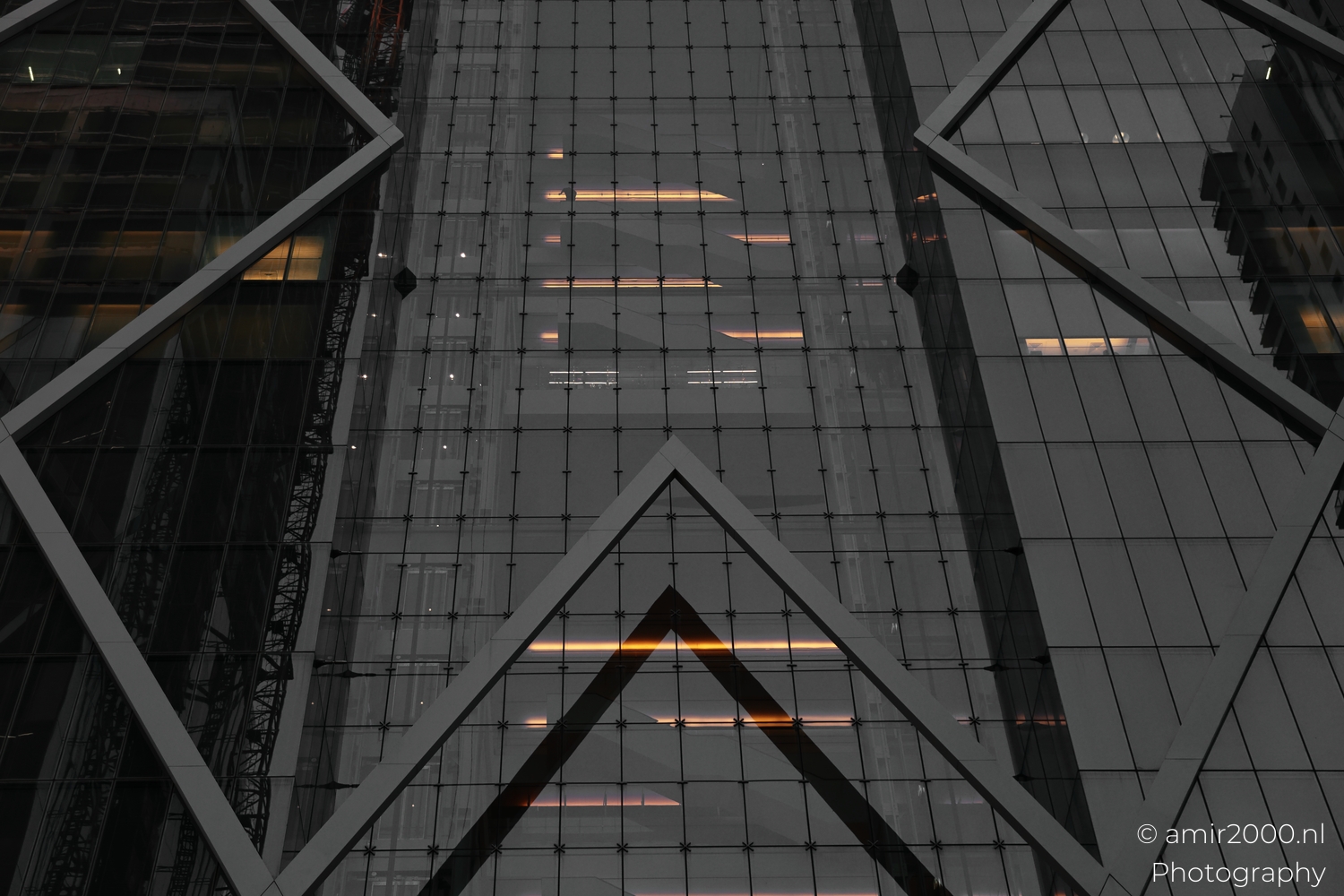
Exposure: 1/320 sec | ISO: 160 | Aperture: F2.8 | Focal Length: 50 mm | © amir2000.nl
Moving closer changes the mood. The reflections deepen, the grid tightens, and warm interior light appears as thin bars behind the glass, framed by a strong V shape in the bracing. At this distance you start noticing the small nodes where the grid meets, the repeating joints, and the subtle imperfections that keep the surface from feeling sterile. I kept this frame darker to protect the reflective feel and to let the warm light stay subtle instead of shouting. It adds a human note to the set, a reminder that behind the pattern there will be life.
Construction lines as part of the design
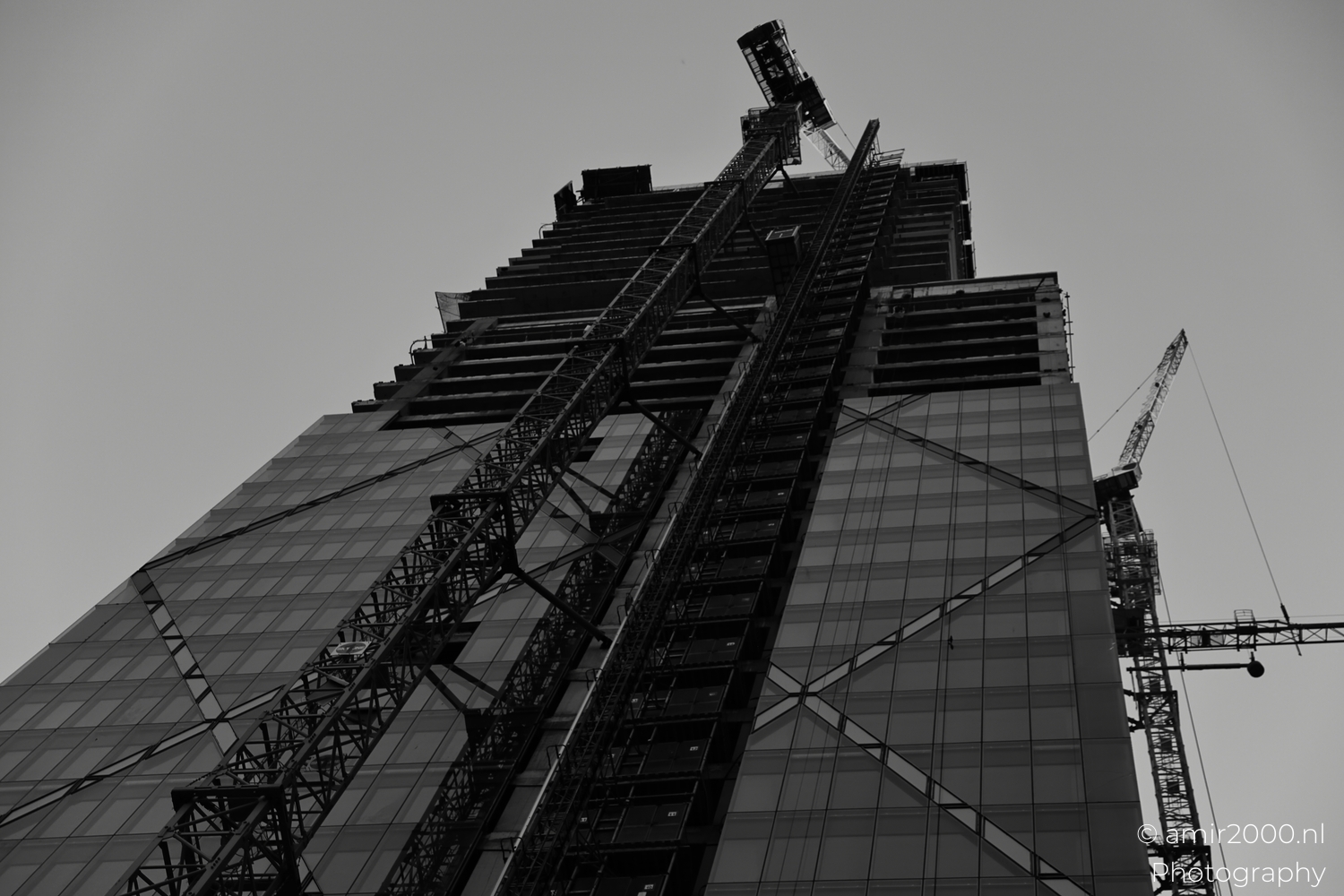
Exposure: 1/500 sec | ISO: 160 | Aperture: F2.8 | Focal Length: 50 mm | © amir2000.nl
On the construction side, repetition comes from slabs and gaps rather than glass and grid. The stacked floors read like dark ribs, and the crane lattice stitches diagonals across the frame, echoing the bracing language from the finished tower. The steep upward perspective makes the top feel unresolved, which fits the reality of a skyline that is always mid build. You can feel the temporary nature of the scene in the exposed edges and open bays, as if the building is showing its skeleton before the skin is finished. Here the city is not a postcard, it is a process.
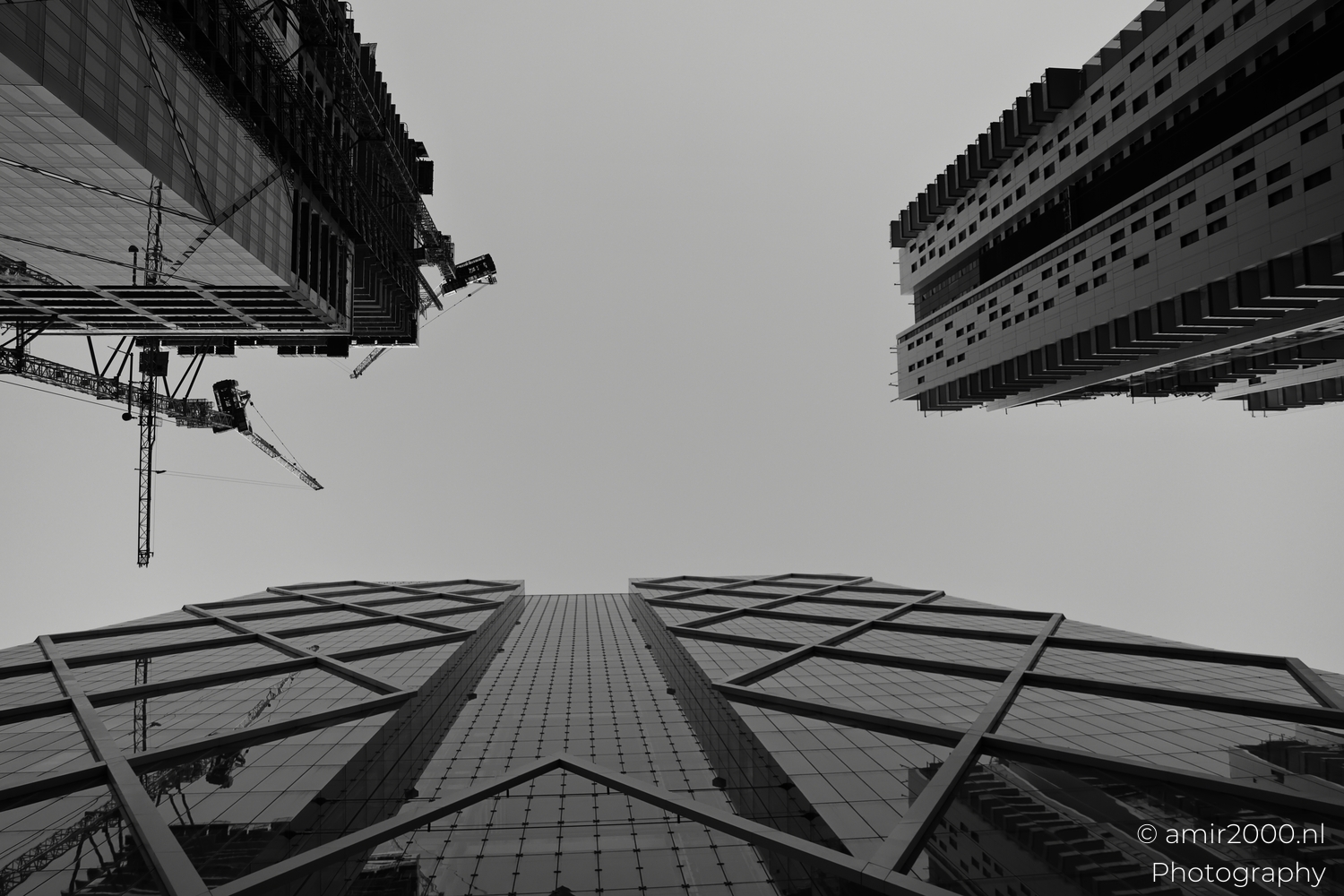
Exposure: 1/500 sec | ISO: 160 | Aperture: F2.8 | Focal Length: 24 mm | © amir2000.nl
To end the set, I gave the sky room to breathe. The buildings frame the empty space, and the central facade lines pull your eye straight up, almost like a corridor made of glass, while the cranes sit at the edges like punctuation marks. I wanted a quieter finish that still holds the theme, so the eye can travel upward without getting trapped in detail. When I finally stood up from that bench, it felt like a small Tel Aviv pause inside a clean architecture study: pattern, scale, and the calm pressure of a city continuing to build. At dusk, looking up, you can still find a pocket of order.
If you want more work in this direction, start with my Architecture gallery and follow the patterns from city to city.
Amir
Photographer, Builder, Dreamer
amir2000.nl
Comments
No comments yet. Be the first to comment!