
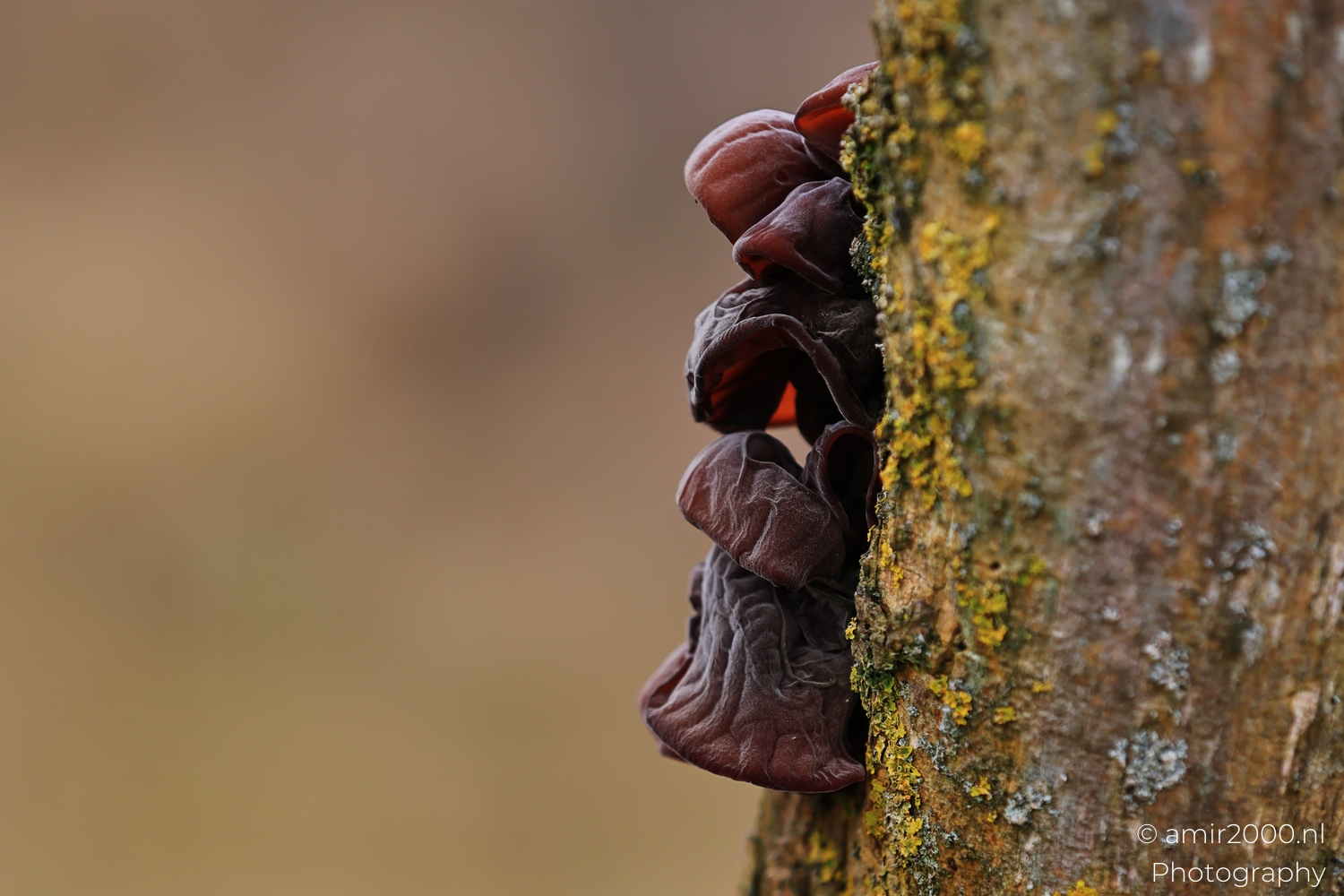
These dark red fungi were easy to miss at first. They were small, tucked into the pale fallen wood, but the colour kept pulling my eye back. Against the soft background, the curled edges started to stand out, especially where the thin rims caught a little light before folding back into deeper red shadow.
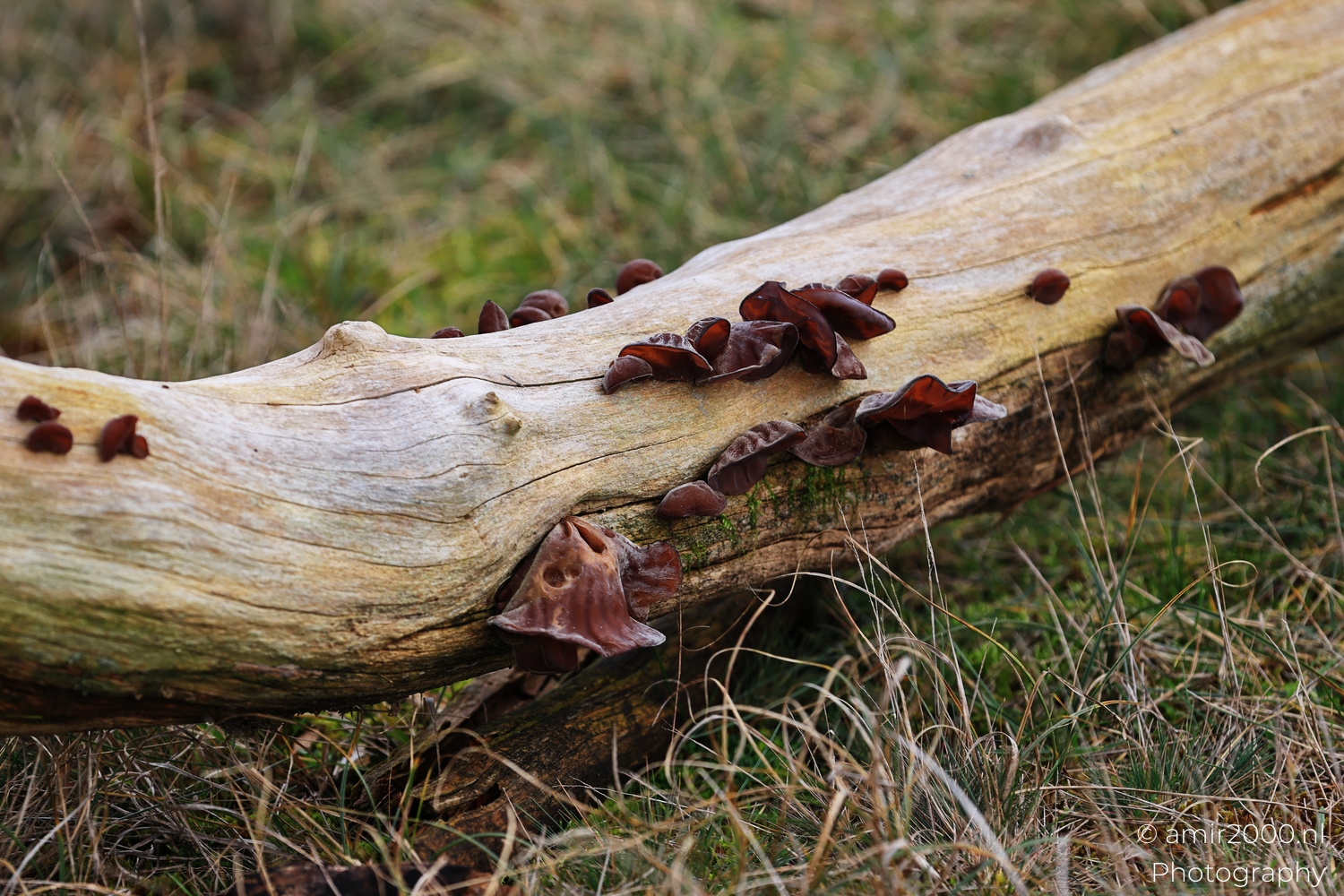
The branch gave the whole scene its shape. Long pale grain runs underneath the fungi, cracked, worn, and smooth in places. The red forms gather in the breaks and shallow hollows rather than sitting neatly on top. Some are still rounded and tight to the surface, while others have opened into small cups, wrinkled flaps, and thin folded shapes along the side of the wood.
Exposure: 1/350 sec | ISO: 160 | Aperture: f/4.5 | Focal Length: 200 mm | © amir2000.nl
From a little farther back, the scale becomes clearer. The fungi share the fallen branch with dry grass, small green patches, darker stains, and rough bits of bark. The larger red folds sit low and close together, while smaller rounded caps appear along the same surface. Nothing feels arranged. The curve of the branch leads the eye, and the fungi break that pale line in small dark accents.
What I liked most was the contrast between the two surfaces. The wood looks dry, scraped, and exposed, with fine cracks and colour shifts from cream to grey. The fungi look damp and leathery beside it. That difference is quiet, but it gives the close-up its tension: hard pale grain against soft red folds.
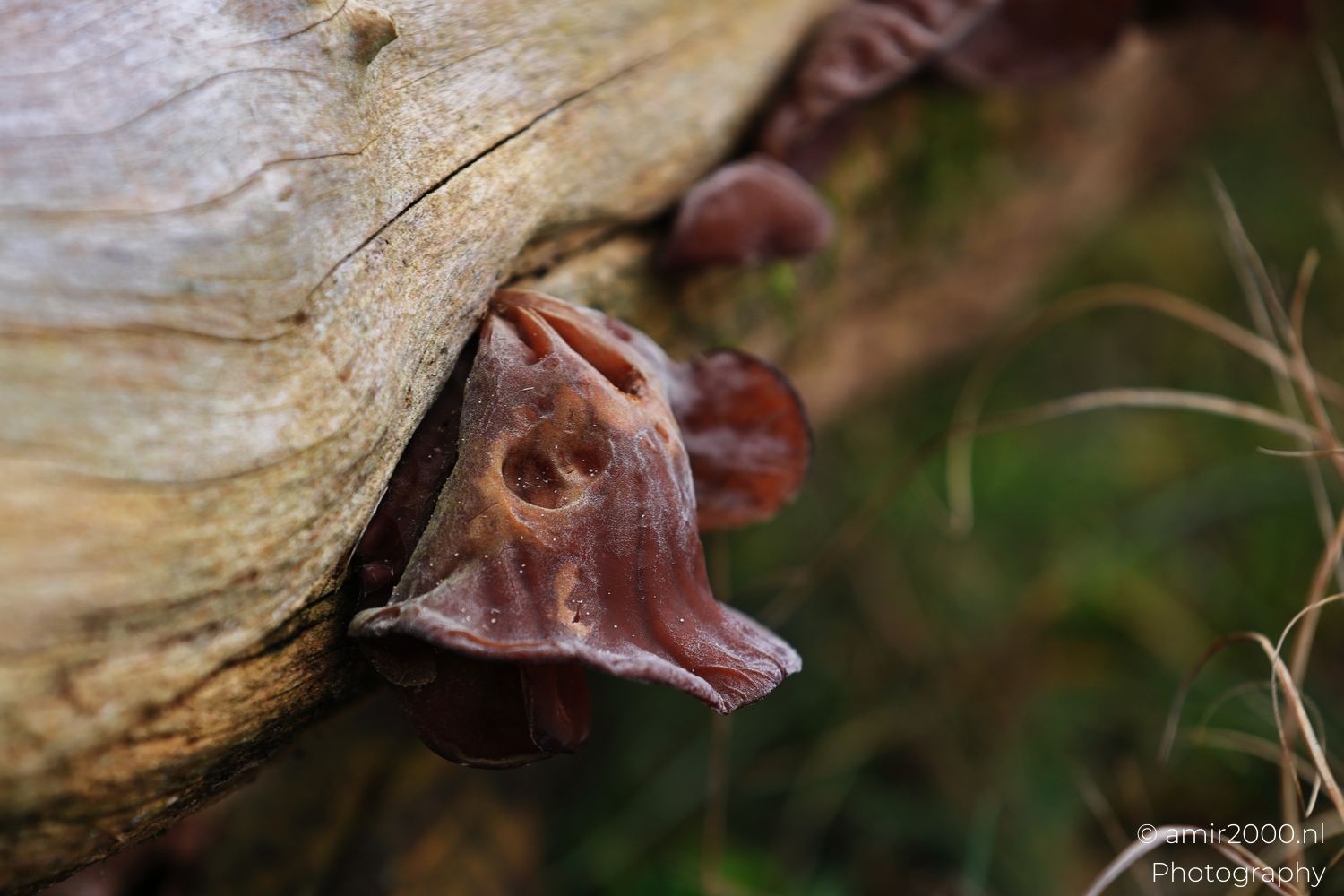
In the tighter views, the red becomes less simple. One larger fungus pushes out from a split in the branch with a pitted surface, raised rim, and uneven folds. Tiny holes catch little shadows, and the curled lip creates a darker line across the red skin. Behind it, the other shapes disappear quickly into blur, leaving only hints of more rounded growths.
Exposure: 1/350 sec | ISO: 160 | Aperture: f/4.5 | Focal Length: 200 mm | © amir2000.nl
With such shallow depth of field, the subject becomes all about edges. A front rim can look sharp and dark, while the fold just behind it softens into brown-red shadow. The wood beside it stays pale and fibrous, with a narrow crack running through the grain. The fungus feels connected to that crack, growing from the opened places in the branch rather than simply resting on it.
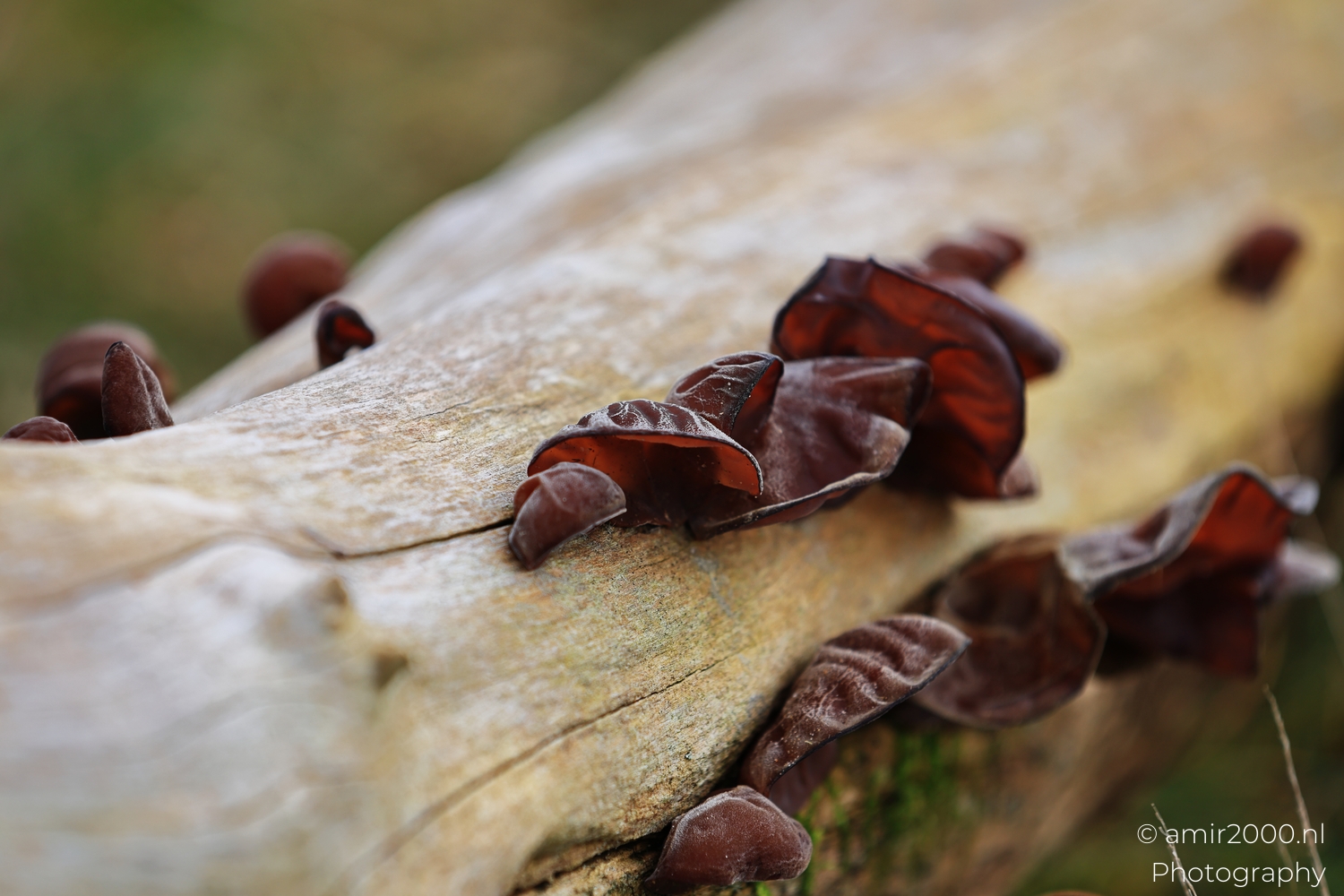
The repeated shapes change as the focus shifts. One folded fungus looks thicker at the base and thinner at the rim. Another catches enough light to make the edge look almost translucent. Nearby, smaller pieces stay closed and smooth, without the wrinkled surfaces of the larger cups. That small change from tight bumps to open folds gives the branch a slow visual rhythm.
Exposure: 1/350 sec | ISO: 160 | Aperture: f/4.5 | Focal Length: 200 mm | © amir2000.nl
In the macro close-up, the branch becomes a surface of small ridges, stains, softened knots, and moss caught near the underside. I tried to keep the view simple, because the subject did not need drama. The red fungi interrupt the pale wood just enough, with curved edges and small shadowed pockets that almost disappear back into the brown and green background.
A few small caps sit apart from the larger cluster on a smoother stretch of wood. They are quieter than the open folds, but the surrounding grain gives them space. Thin lines run past them, faint marks cross the surface, and the background falls into green blur before the branch curves away.
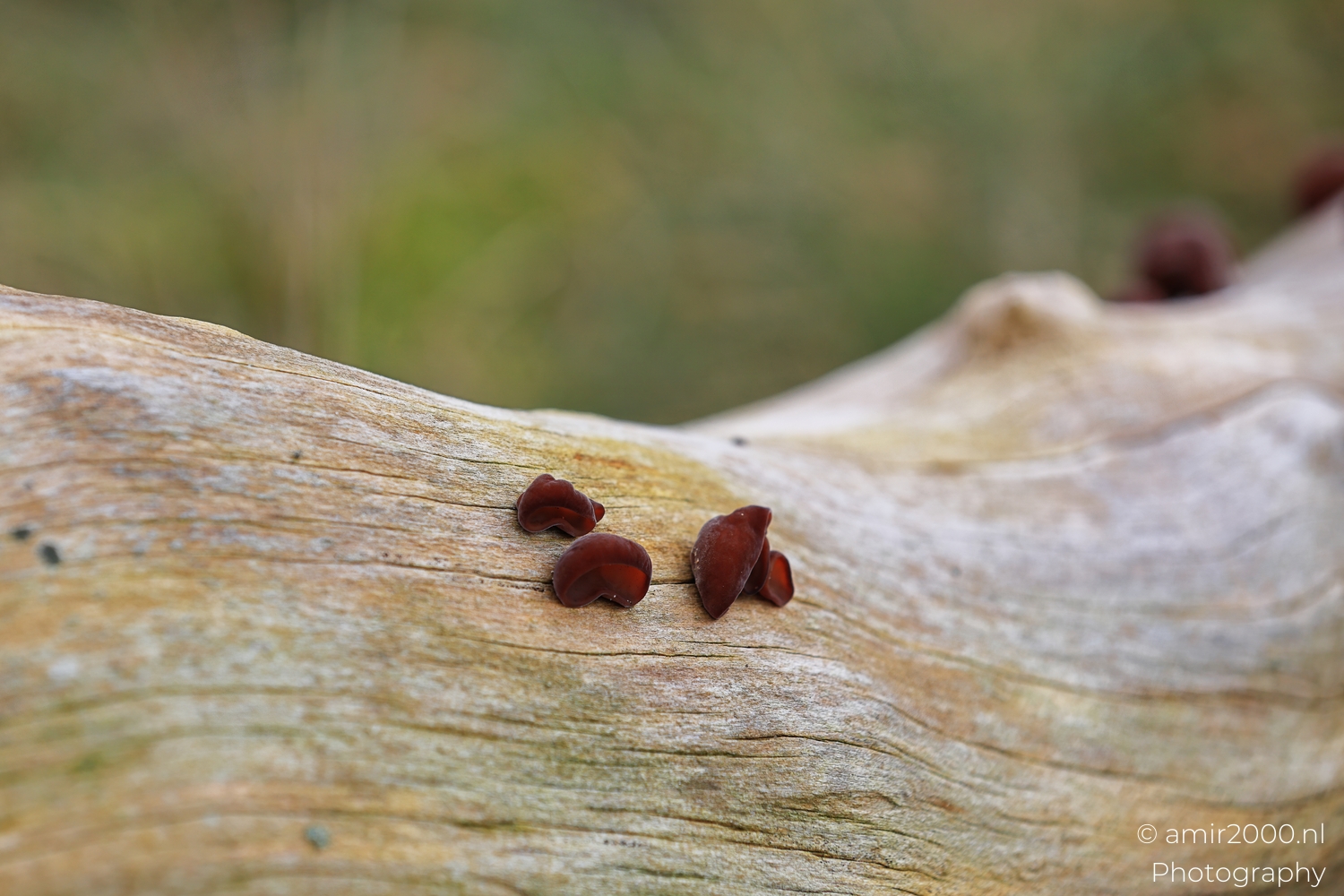
Exposure: 1/350 sec | ISO: 160 | Aperture: f/4.5 | Focal Length: 140 mm | © amir2000.nl
For me, the strongest detail is still the smallest one: a dark red rim lifting from pale grain, thin at the edge and heavier where it folds back into shadow.
More work from this gallery: Macro Photography Gallery
More posts in this category: Macro Photography
Amir
Photographer, Builder, Dreamer
amir2000.nl
Comments
No comments yet. Be the first to comment!