
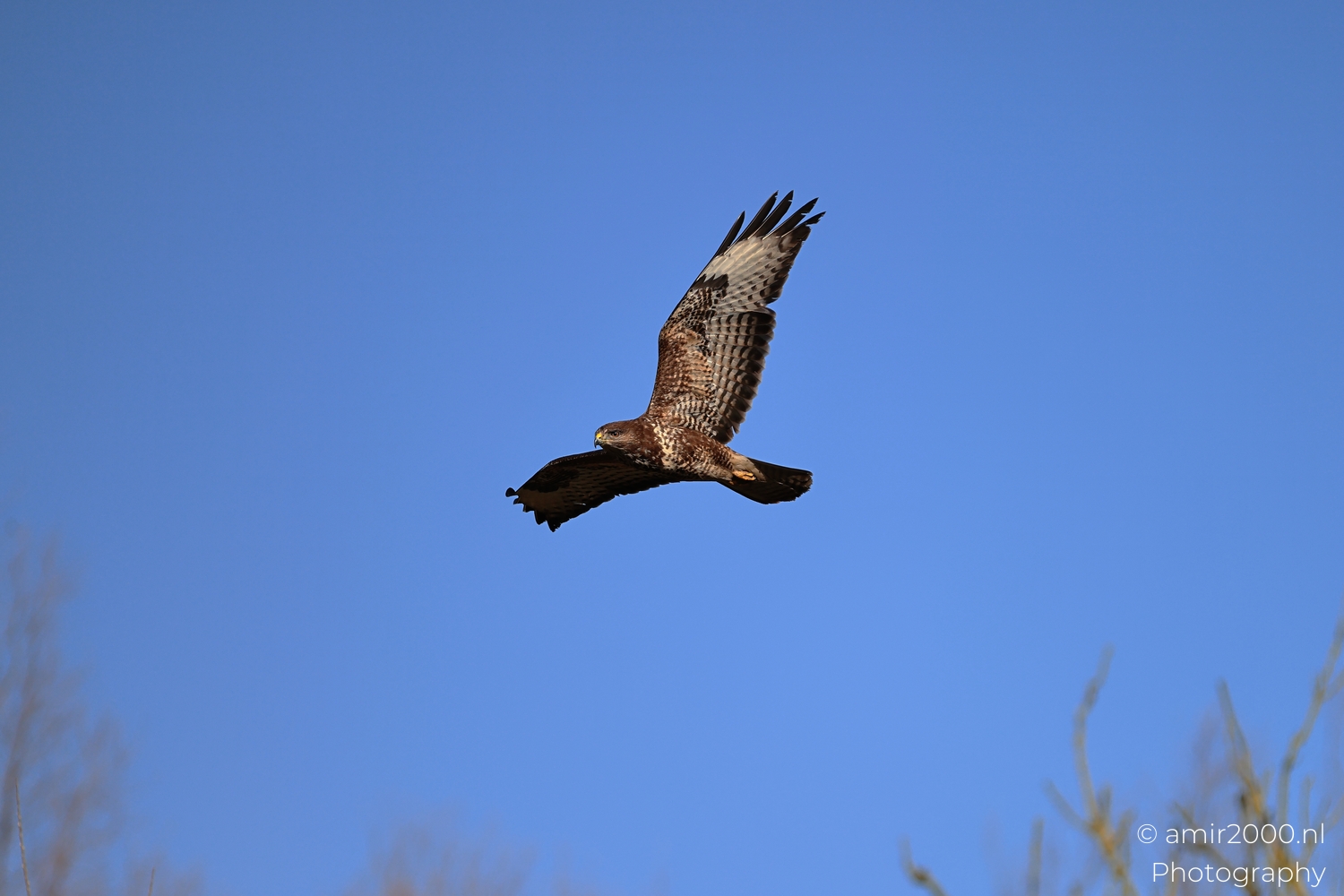
A Common Buzzard opens its wings into clear blue winter sky, just above the soft line of bare tree tops. There is enough space for the bird to hold a clean path, but the woodland edge is still close enough to matter. Light reaches the barred wing feathers and leaves the body heavier underneath, so the flight feels physical rather than decorative. For a few seconds the whole scene is air, distance, and timing: one bird carrying itself across a large empty field of blue.
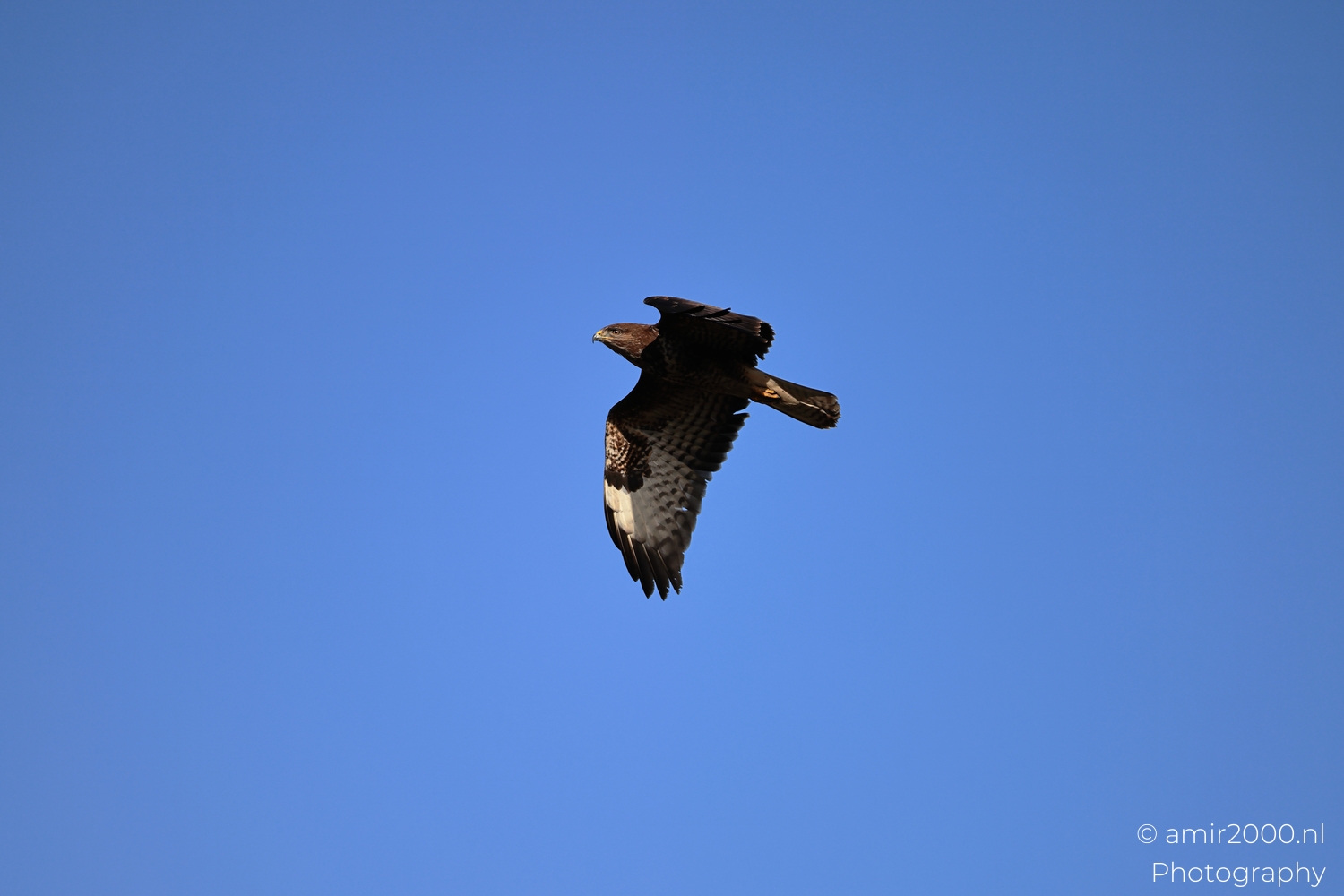
Exposure: 1/6000 sec | ISO: 200 | Aperture: f/2.8 | Focal Length: 200 mm | © amir2000.nl
The buzzard keeps working the same patch of sky, but the movement does not repeat itself. A wing lifts, the tail corrects the line, and the bird banks before the trees can crowd the route. I like these raptor moments because they happen quickly and quietly. There is no big arrival, no obvious pose, just a series of small corrections that decide whether the bird keeps height or drops into the rougher air near the branches.
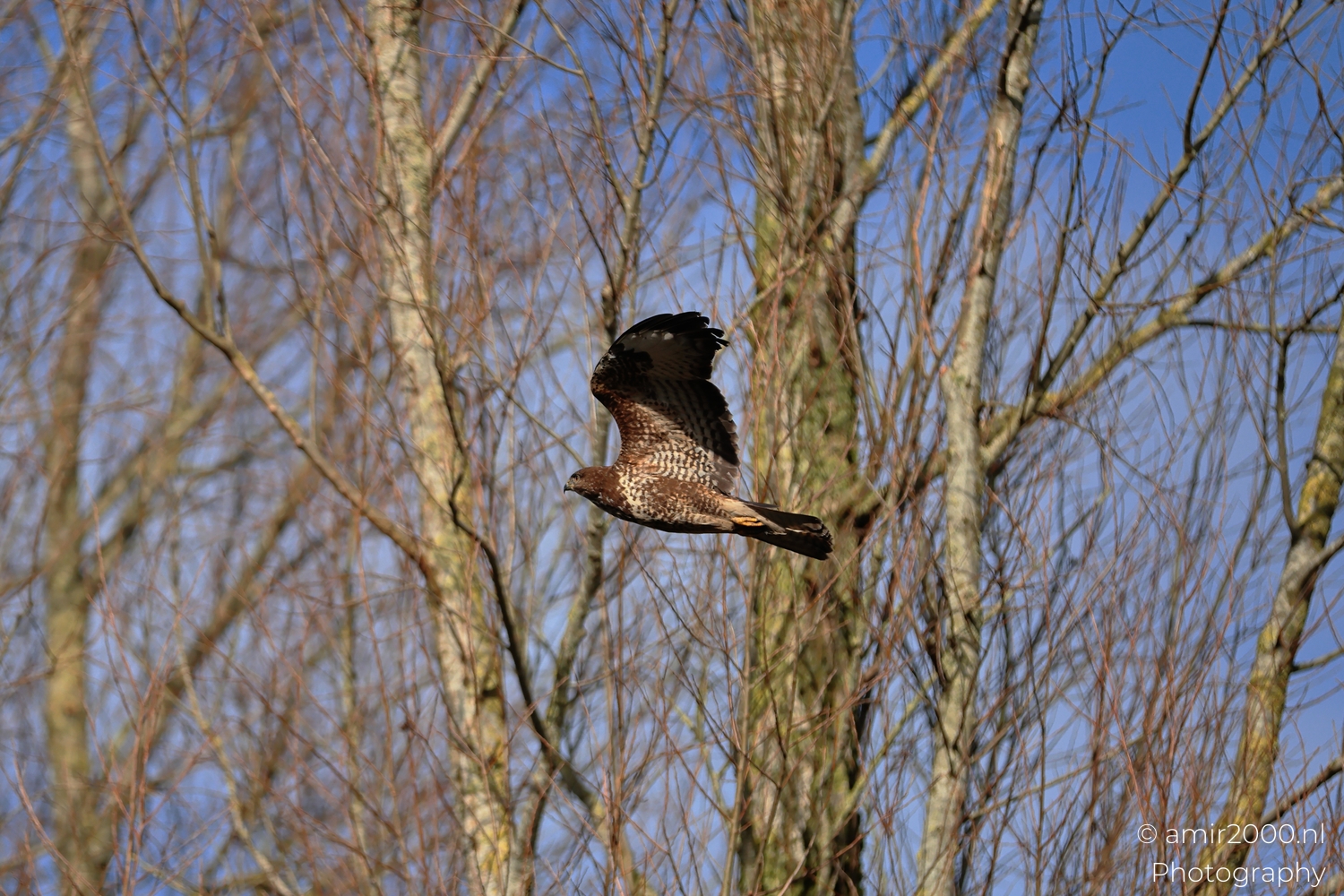
Exposure: 1/6000 sec | ISO: 200 | Aperture: f/2.8 | Focal Length: 200 mm | © amir2000.nl
Bare trunks pull the bird back toward winter ground. The blue is still there, but now it is broken by vertical bark, fine twigs, and narrow gaps that leave less room for a lazy turn. The buzzard passes in front of the trees with its brown feathers almost touching the same colour range as the woodland behind it. The clean flight becomes more demanding there. One small loss of height would put the wing into a branch; one good turn sends it back into open air.
Pale cloud changes the pace. The Kestrel is not crossing the sky but holding a high perch on a bare branch, with dark bark below and blurred winter trees behind. Its rust coloured back, grey head, spotted breast, and hooked beak are clear against the washed sky. The branch gives no cover and almost no comfort, but it gives height, and height is enough. From there the bird can watch the ground and leave without fighting through leaves.
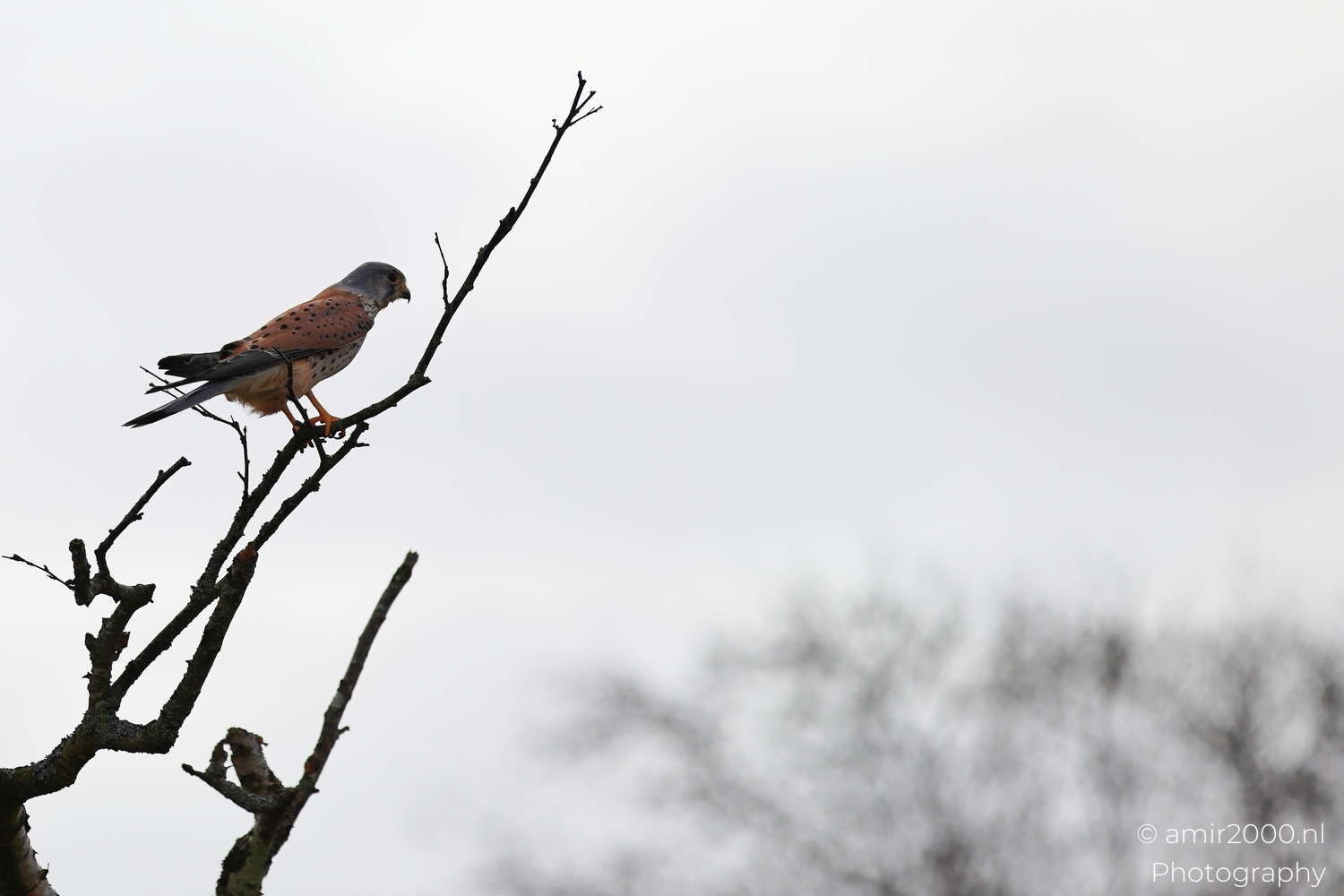
Exposure: 1/2000 sec | ISO: 160 | Aperture: f/3.5 | Focal Length: 200 mm | © amir2000.nl
The perch looks even more exposed when more of the tree comes into view. Dark limbs split the pale sky, and the Kestrel stays out on the thinner branch instead of close to the trunk. That outer position gives it a clear drop and room to launch. Its feet grip a narrow piece of wood, the body follows the branch, and the head keeps dipping toward the unseen ground. The sky has gone flat and grey, so every hard line belongs to the tree or the bird.
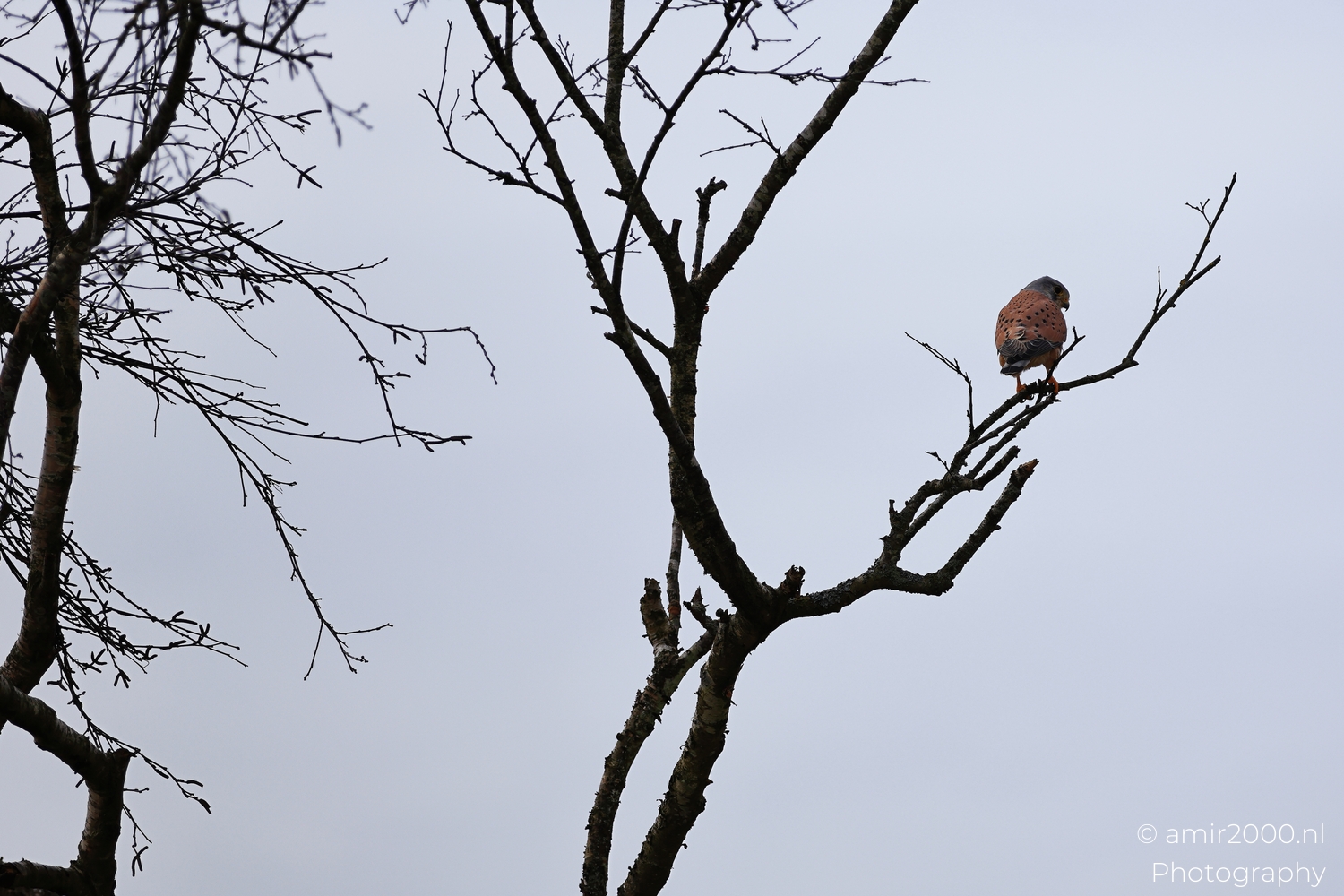
Exposure: 1/3000 sec | ISO: 160 | Aperture: f/2.8 | Focal Length: 200 mm | © amir2000.nl
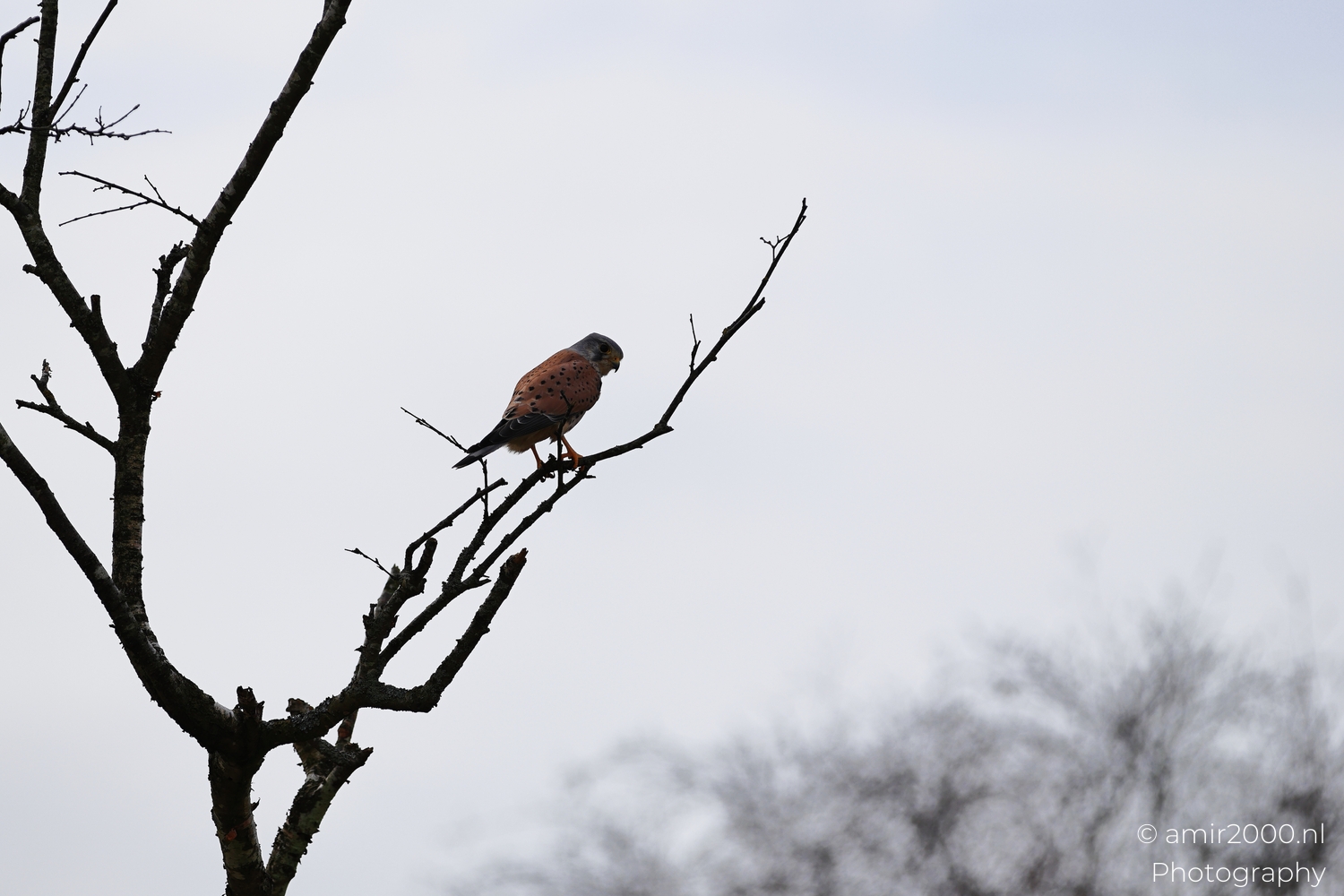
Exposure: 1/2000 sec | ISO: 160 | Aperture: f/3.5 | Focal Length: 200 mm | © amir2000.nl
The last hold is quieter. Folded wings stay tight to the body, the tail lies close to the line of the branch, and the Kestrel leans forward as if the ground below has pulled its attention. Behind it, the lower trees dissolve into a soft grey blur. Nothing announces a takeoff. The bird remains balanced on the dark fork, with one thin branch pointing into blank winter sky.
More work from this series can be viewed in the nature photography gallery and the Nature Landscape Photography blog category.
Amir
Photographer, Builder, Dreamer
amir2000.nl
Comments
No comments yet. Be the first to comment!